RCRA training is required yearly for hazardous waste handlers under 40 CFR 262.17. Generators come in three sizes: Large Quantity Generator (LQG) above 1,000 kilograms a month, Small Quantity Generator (SQG) from 100 to 1,000 kilograms, and Very Small Quantity Generator (VSQG) under 100 kilograms. Federal civil penalties under EPA RCRA enforcement can reach $87,150 per day per violation, and missed refresher dates draw inspector attention first.
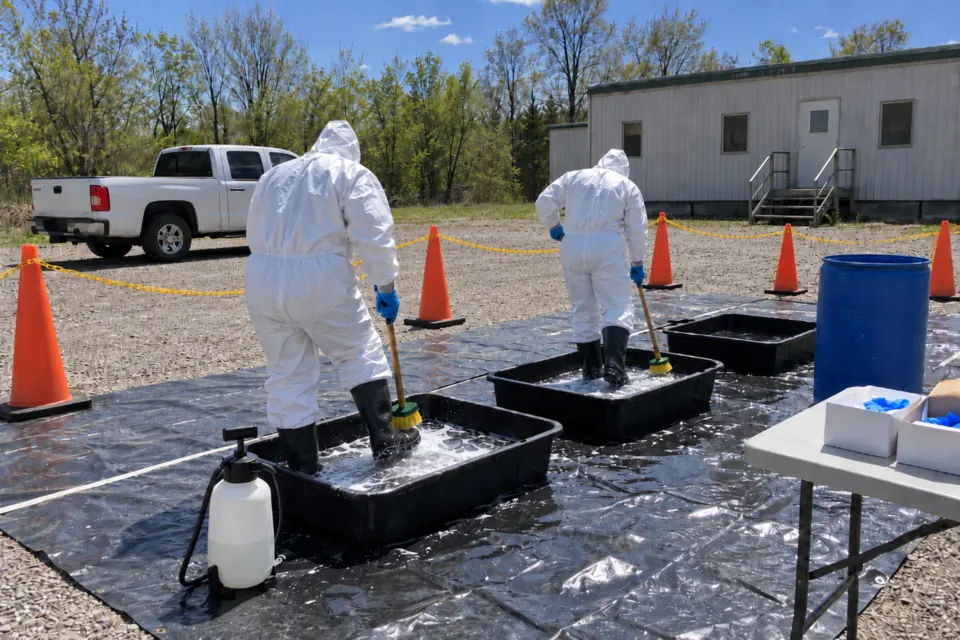
RCRA training means compliance instruction for the hazardous waste tasks facility staff perform, from waste determinations to spill response. The covered roles extend beyond people physically moving drums. Anyone signing manifests, making waste determinations, preparing labels, or responding to spills must complete the qualification. A site clerk who only enters data into the eManifest portal still falls inside the rule because that function sits inside the manifest chain.
Each generator category triggers different training depth, refresher cadence, and documentation. What follows walks through the categories, the content the regulation specifies, refresher rules at 40 CFR 265.16, the petroleum exclusion and where it ends, and how UST contractors should verify training before crews touch contaminated soil.
The fastest path to verified compliance is to source crews through find UST contractors and confirm certifications via request a quote before mobilization.

What RCRA Training Covers And Who Needs It
RCRA training under the Resource Conservation and Recovery Act covers every person who handles hazardous waste at a regulated facility. The federal rule sits at 40 CFR 262.17(a)(7) for generators and 40 CFR 265.16 for interim status treatment, storage, and disposal facilities. Both sections require that workers complete training before they perform job functions unsupervised, and that the program cover the specific waste streams a worker will handle on the job.
Covered roles reach further than the people physically moving drums or rolling totes onto trucks. Anyone signing manifests, making waste determinations, applying labels, or coordinating emergency response falls under the rule. A site clerk entering data into the EPA eManifest portal must understand the manifest function well enough to catch obvious errors, because data entry sits inside broader regulated manifest oversight.
EPA RCRA inspectors review hazardous waste training records as a leading indicator during routine compliance evaluations. The Resource Conservation and Recovery Act Information system tracks inspections by region, and EPA publishes annual enforcement summaries showing the most common violations. Training deficiencies appear in roughly one in five generator inspection reports across recent enforcement cycles, which is why inspectors often open the training file before any other document.
For UST contractors, the requirement appears every time a cleanup produces drummed soil that exceeds a hazardous waste characteristic. Crews working a site where a leaking gasoline tank pushed benzene above regulatory thresholds need at least one trained generator employee on payroll to sign the manifest. The UST operator training guide covers the separate Class A, B, and C tank operator training, which sits alongside but does not replace the RCRA training rule.
Generator Categories: VSQG, SQG, And LQG Thresholds
Generator category determines training depth, manifest rules, accumulation time limits, and refresher cadence. EPA defines three categories under 40 CFR 262.13 based on the kilograms of hazardous waste generated in a calendar month. The category resets month by month, so a facility can shift up or down depending on production cycles, cleanup events, or one time disposal projects.
A Very Small Quantity Generator produces 100 kilograms or less of hazardous waste per calendar month, with an additional limit of one kilogram of acute hazardous waste. VSQG status carries the lightest training burden, with no formal documented annual program required under federal rule. Workers still must understand what they handle, but the structured written training plan that applies to LQG and SQG sites does not apply to a VSQG.
A Small Quantity Generator produces between 100 and 1,000 kilograms per month and faces meaningful training duties. Personnel must be thoroughly familiar with proper waste handling procedures, emergency response measures, and equipment use. SQG sites are not required to maintain the same written training plan with formal job descriptions and detailed recordkeeping that LQG facilities file, but the practical content overlap is significant.
A Large Quantity Generator produces 1,000 kilograms or more in any single calendar month, or more than one kilogram of acute hazardous waste. LQG facilities must run a documented program that includes classroom or online instruction, hands on experience, written job descriptions, and annual review. The full content list lives at 40 CFR 262.17(a)(7) and is the most heavily inspected piece of any generator file.
The Petroleum Exclusion And Why Most UST Product Is Not RCRA Waste
The petroleum exclusion is the single most important RCRA concept for the UST world. EPA wrote into 40 CFR 261.4(b)(10) that petroleum contaminated media and debris are not RCRA hazardous waste when they fail the Toxicity Characteristic solely because of petroleum constituents. The exclusion applies only when the waste is generated under Subtitle I, which is the federal underground storage tank program.
In practice this means a gasoline release at a service station that pushes benzene above 0.5 milligrams per liter on a Toxicity Characteristic Leaching Procedure test does not automatically force the soil into a RCRA hazardous waste stream. State UST cleanup programs handle corrective action, and that soil moves under non hazardous solid waste rules as long as petroleum is the only driver of the characteristic failure.
The exclusion does not cover used oil mixed with chlorinated solvents, lead arsenate from old soil treatments, or contamination from anything other than petroleum stored at the same site. A former service station with a separate solvent degreaser tank can produce soil that hits multiple Toxicity Characteristic Leaching Procedure constituents at once. Once a non petroleum constituent drives the failure, the petroleum exclusion ends and full RCRA rules apply.
Workers handling cleanup waste need to understand the exclusion well enough to recognize when their site does or does not qualify. A simple decommissioning at a low risk residential heating oil tank rarely produces RCRA waste, while a former dry cleaner sharing a parcel with an old UST often does. The waste characterization process governs the outcome more than the project type label, and characterization sits squarely on the generator.
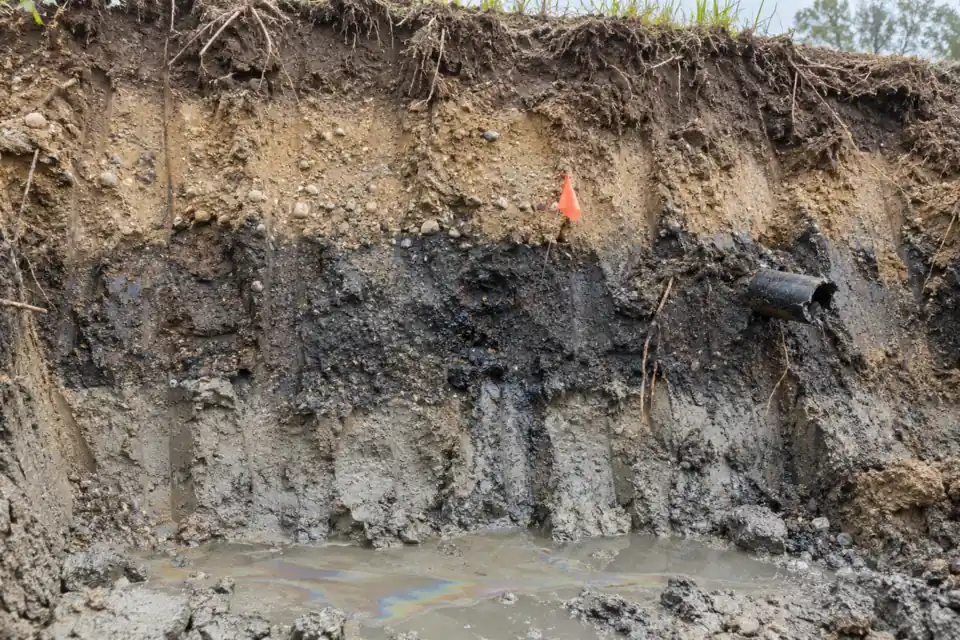
When UST Cleanup Waste Crosses Into RCRA Territory
Several common UST cleanup waste streams fall outside the petroleum exclusion and become regulated under full RCRA generator rules. Tank bottom sludge with high lead content from leaded gasoline era tanks, used solvent rags from line cleaning, spent absorbent contaminated with chlorinated cutting fluids, and rinse water containing degreaser residuals all leave the exclusion behind once tested.
The waste determination falls on the generator, not the disposal facility downstream. EPA places this duty squarely at 40 CFR 262.11, which requires that anyone who generates a solid waste must determine whether it is hazardous and then document the determination. A contractor pulling tanks on an oil tank removal job carries this duty for every drum, super sack, and roll off container generated on site.
Generator status calculations include excluded petroleum waste in the gross weight even when the waste itself is not RCRA hazardous. A small repair shop that crosses 100 kilograms of total hazardous waste in a month, counting characteristic solvents from line cleaning, jumps from VSQG to SQG status for that month. The shift triggers training documentation, manifest use, and an EPA Identification Number requirement that did not exist the prior month.
Many operators forget that a single episodic cleanup event can flip status entirely. A tank pull that surfaces 800 kilograms of lead contaminated soil over 4 days can briefly push a facility into SQG range, and depending on how state agencies count episodic generation, into LQG territory. Some state programs in New Jersey and California impose stricter generator thresholds than the federal floor.
Required Training Content Under 40 CFR 262.17
40 CFR 262.17(a)(7) lays out the minimum required content for an LQG training program in tight regulatory language. Workers must be trained on procedures relevant to their position, and the training has to ensure that personnel are able to respond effectively to emergencies. The program must also cover proper contingency plan implementation and what actions personnel must take during incidents.
Specific topics include procedures for using, inspecting, and repairing emergency and monitoring equipment, plus key parameters for automatic waste feed cutoff systems where applicable. The rule also covers communications and alarm systems, response procedures for fires or explosions, response to groundwater contamination incidents, and shutdown procedures for operations. EPA RCRA inspectors review the documented syllabus to confirm each element is present and tied directly to a job position.
The regulation also requires a written job description for every position involved with hazardous waste management. It mandates a written description of the type and amount of both introductory and continuing training each position requires. Records must document the training each employee has actually completed. They must be kept until closure of the facility for current employees, and for 3 years after the date a former employee last worked at the facility.
For UST contractors, the practical content overlap with HAZWOPER training is significant, but the two qualifications are not interchangeable. HAZWOPER training under 29 CFR 1910.120 covers worker safety at hazardous waste cleanup sites. RCRA training under 40 CFR 262.17 covers waste handling, recordkeeping, and manifest duty at the generator level. A field crew on a contaminated cleanup project often needs both at the same time.
Annual Refresher Rules And Documentation That Survives Inspection
The annual refresher rule is the single most cited RCRA training deficiency in EPA enforcement summaries. 40 CFR 262.17(a)(7)(iii) requires that facility personnel complete an annual review covering initial training content. Missing one refresher year breaks the entire program and creates an open finding the inspector documents in the closing conference.
Refresher content does not have to repeat the full initial program, but it must cover any changes to the contingency plan, updates to waste streams, and refreshed emergency response material. Industry programs typically run between 2 and 8 hours depending on the role. A maintenance technician at a small SQG plating shop might complete a 2 hour refresher, while a shipping coordinator at an LQG chemical site can sit through 6 to 8 hours of manifest, label, and waste code updates.
Records must show the name of each employee trained, the job title, a written description of the RCRA training each position requires, and the actual training records linked to the employee. The eManifest module on the EPA portal does not store these training records for the generator, so the recordkeeping obligation remains entirely on the facility itself.
Inspectors flag programs that lack signatures, that list a training course but no syllabus, or that include employees no longer working at the facility without proper retention dates. Cleaning the file the morning of an inspection rarely works, because the EPA RCRA enforcement framework grants inspectors the right to request multi year history on the spot. Keep the file current as a continuous practice rather than a sprint.
Choosing A Training Provider And Verifying Contractor Compliance
Picking a RCRA training provider comes down to syllabus mapping against 40 CFR 262.17 and 40 CFR 265.16, the certificate format, and the level of ongoing support. The lowest cost online module often skips the position specific section that 40 CFR 262.17(a)(7) requires, and the certificate ends up worthless when the inspector asks to see how the training mapped to the written job description.
Good providers issue certificates that list the federal regulation cited, the completion date, the duration in hours, and the topics covered. Many state hazardous waste programs maintain provider rosters or recognition lists, particularly in authorized states where the state Hazardous Waste Control Law has been adopted under EPA RCRA authorization. California, for example, runs the Department of Toxic Substances Control oversight model that adds state level documentation expectations on top of the federal floor.
Verifying a contractor before the crew arrives is straightforward but routinely skipped. Ask for the company written training program, copies of the most recent RCRA certification for the crew lead and any worker who will sign a manifest, and proof of annual refresher completion within the prior 12 months. A contractor unable to produce these documents in under one business day is a contractor who has not been audited recently and should not be on a regulated job.
A contractor with verified RCRA, HAZWOPER, and state UST credentials in hand answers the inspector's first question before the first drum leaves the site. Verify training records, certificate dates, and refresher dates before any crew mobilizes. Crews should expect this paper trail at minimum under the federal rules, and authorized states such as California and New Jersey layer their own expectations on top.