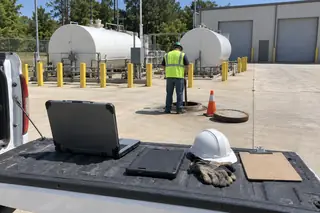
Building a new gas station costs about $3.1 million to $9.4 million before land. That is the range Circle K files with state franchise regulators in its 2026 disclosure, and it counts an optional car wash. Holiday's 2025 disclosure puts a new store and fuel site at $3.4 million to $7.7 million, with land and a car wash included.
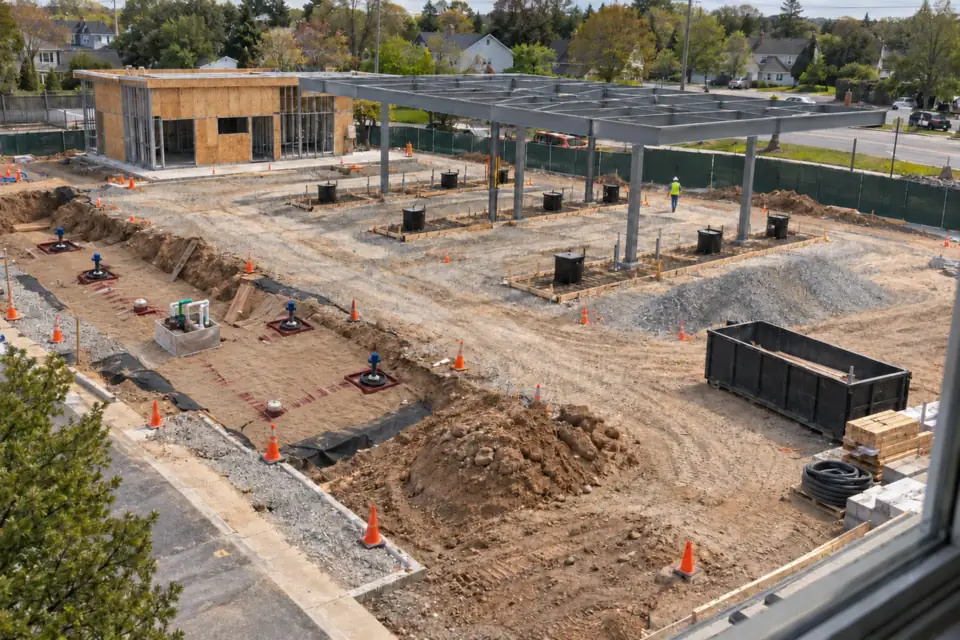
The cost to build a gas station is the sum of four separate projects: the land, the store and canopy above ground, the fuel system installed below it, and the working capital that carries the site until volume shows up. Published totals disagree because each source includes a different subset. Read the scope line before you read the number.
The cheapest figures you will see describe a different project. Sunoco's 2025 disclosure for its APLUS convenience stores puts a leased store with no fuel system at $239,850 to $726,700. A newly built APLUS store, still without fuel, runs $808,950 to $1,973,600. Land, tanks, dispensers and the canopy are the lines those totals leave out.
What follows prices the whole build line by line from those disclosures, EPA's own cost data and public bid records, with the most attention on the part that goes underground. Buying an operating station is a different transaction with a different diligence file, and the gas station buyer's due diligence guide covers that side. Everything here assumes you are starting with dirt.
How much does it cost to build a gas station?
Franchisors must publish an estimated initial investment in Item 7 of their Franchise Disclosure Document under the FTC Franchise Rule, and those tables are the most detailed public price lists for a new station. Circle K's 2026 table runs from $3,098,500 to $9,430,500, although the cover page of the same filing gives $8,430,500 as the top. It leaves land out, saying the cost of land cannot be estimated.
Holiday's 2025 table assumes you own the land and the building. According to that table, land runs $500,000 to $2,000,000 and building and site work $1,100,000 to $2,250,000, for a total of $3,356,200 to $7,742,500. That total includes an optional car wash, which Holiday does not require.
Public building records show the same scale. A 2021 Texas accessibility filing for a new Circle K store in Lubbock, covering the 9,997 square foot store, the tanks, piping, dispensers and canopy, lists an estimated cost of $3,700,000. Owners declare that number to the state for plan review, so treat it as an estimate rather than a final price.
None of these documents shows a full gas station construction budget anywhere near $250,000. Totals that low price a leased store without a fuel system, or a fuel system added to a store that already stands. Rebuilding the fuel system on a site you already own, with utilities in and the store standing, costs a fraction of a new build.
| Line item | Figure | Source and scope |
|---|---|---|
| Total, new store and fuel site, before land | $3,098,500 to $9,430,500 | Circle K 2026 FDD Item 7 (cover page says $8,430,500 top); optional car wash included |
| Total, new store and fuel site, with land | $3,356,200 to $7,742,500 | Holiday 2025 FDD Item 7; owned land and building, optional car wash included |
| Total, leased store with no fuel system | $239,850 to $726,700 | Sunoco APLUS 2025 FDD Item 7 |
| Land | $500,000 to $2,000,000 | Holiday 2025 FDD; Circle K says land cannot be estimated |
| Building and site work | $1,100,000 to $2,250,000 | Holiday 2025 FDD |
| Construction, store and forecourt | $1,800,000 to $6,000,000 | Circle K 2026 FDD; stores average about 5,200 square feet |
| Other site development | $135,000 to $250,000 | Circle K 2026 FDD; assumes utilities at or next to the building pad |
| Store construction only, about 3,000 square feet | $375,000 to $1,100,000 | Sunoco APLUS 2025 FDD; no fuel system |
| Furniture, fixtures and equipment, fuel equipment included | $500,000 to $1,200,000 | Circle K 2026 FDD |
| Gas station canopy, installed | $68,777 and $101,930 | Boone County, Missouri bid, October 2024; two small county fueling sites |
| Double walled tank and piping, installed | $88,707 per tank (2006 dollars) | EPA cost analysis for the 2015 UST rule; tank included |
| Point of sale and back office | $64,000 to $115,000 | Holiday 2025 FDD ($64,000 to $80,000) and Circle K 2026 FDD ($70,000 to $115,000) |
| Signs | $50,000 to $250,000 | Circle K 2026 FDD ($50,000 to $150,000) and Holiday 2025 FDD facade and pylon signs ($80,000 to $250,000) |
| Construction plans and specifications | $85,000 to $180,000 | Holiday 2025 FDD |
| Permits, deposits and related costs | $30,000 to $100,000 | Holiday 2025 FDD |
| Initial fuel inventory | $100,000 to $300,000 | Holiday 2025 FDD |
| Opening store inventory | $70,000 to $120,000 | Holiday 2025 FDD, groceries, food service items and merchandise |
| Insurance before opening | $7,500 to $24,000 | Circle K 2026 FDD; Holiday 2025 FDD gives $13,000 to $20,000 |
| Inherited cleanup, former fuel site | Median $27,120 to $265,883 per site | EPA 2022 LUST cleanup cost study, three states |
What do land and site work cost?
Land has no national number. Holiday's $500,000 to $2,000,000 is the only franchisor land range in the three disclosures reviewed here. The 2026 Circle K filing does not estimate land at all, and says a store generally needs at least 50,000 square feet of it. A corner in a small market can cost far less, and a highway interchange far more.
Site work follows the dirt you bought. The Circle K filing budgets $135,000 to $250,000 for other site development on top of construction, and its estimates assume no unusual site conditions and utilities already at or next to the building pad. Grading, rock, stormwater detention and a long run to sewer or three phase power all sit on top of that.
The trap on land is buying a parcel that was already a fuel site. A former station looks cheap because the seller is motivated and the zoning is already correct, and what the discount is pricing is the old tank system. The redevelopment options for a closed gas station page walks through what those sites cost to reopen.
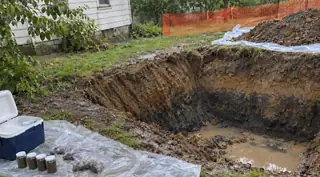
Cleanup is where that discount goes. EPA's 2022 study of leaking tank cleanups found median costs per site of $27,120 in Virginia and $94,195 in South Carolina, and $265,883 for Kansas sites that needed active remediation. Pulling the old system out is its own budget, covered in the UST removal cost guide. Price the cleanup before you sign, not after.
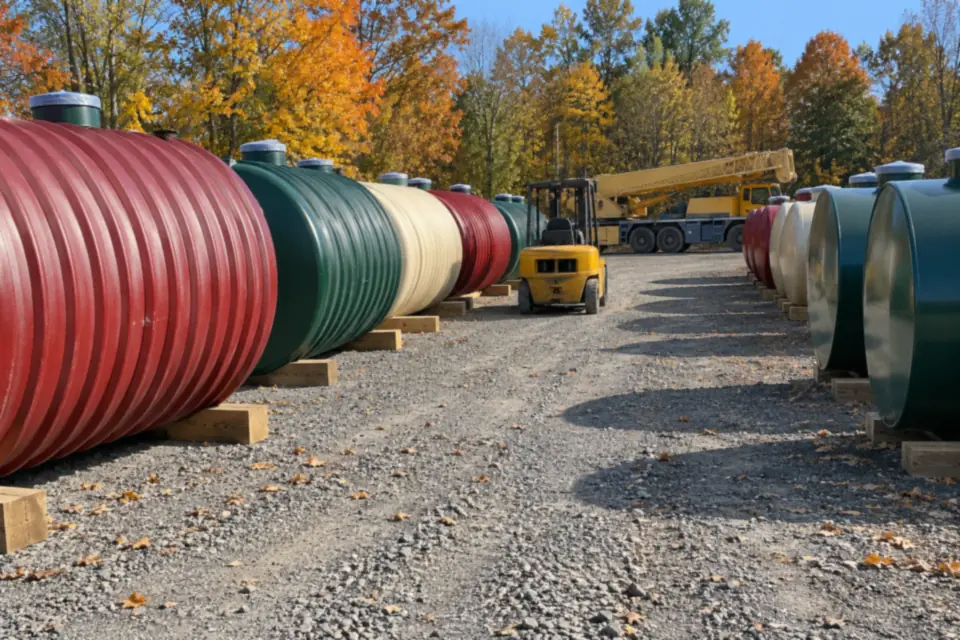
What do the store and canopy cost?
Above ground construction is where the range widens on purpose, because it tracks what you decided to sell.
Convenience store cost per square foot
A bare box with a counter and coolers is a different building from a convenience store with a kitchen, a drive through, and seating. Sunoco's APLUS disclosure prices construction of a store of about 3,000 square feet at $375,000 to $1,100,000, roughly $125 to $367 per square foot, with no fuel system. Circle K's construction line, which covers stores averaging about 5,200 square feet plus the forecourt, runs $1,800,000 to $6,000,000.
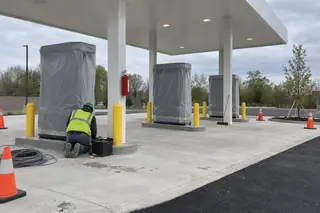
The gas station canopy is a bigger line than most first timers expect. In an October 2024 bid in Boone County, Missouri, the only bidder priced installed canopies for two small county fueling sites at $68,777 and $101,930. A retail forecourt with more fueling positions spans further, and every added position also adds forecourt concrete and underground piping.
Bigger forecourts stop paying at some point. Each fueling position has to earn its concrete, and six dispensers on a site that will move 60,000 gallons a month is money sitting in the ground. Match the dispenser count to a volume forecast you can defend, and pour the conduit for future positions now rather than the positions themselves.
What does the fuel system cost?
Six components sit under and around the forecourt: the tanks, the piping, the sumps, the monitoring, the dispensers and, where the state or the station's gasoline volume requires it, vapor recovery. They are priced, installed and inspected as one system, and the price of the vessel on a vendor quote tells you little about the installed cost.
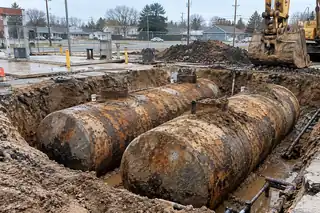
When EPA costed its 2015 tank rule, it put a double walled underground storage tank and its piping, installed, at $88,707 per tank in 2006 dollars, with the tank itself included. Rock, deep excavation and long piping runs push a site above that, and two decades of construction inflation sit on top. EPA's unit costs for the required safety equipment were smaller: $4,098 for an automatic tank gauge, $2,133 for spill prevention equipment and $1,931 for overfill prevention equipment, in 2012 dollars.
Gas pump and dispenser cost
No franchisor disclosure or government source we found prices a fuel dispenser on its own. Circle K folds fuel equipment into a furniture, fixtures and equipment line of $500,000 to $1,200,000, and says the cost depends on the canopy and on the condition, model and number of dispensers. What federal rules add is fixed: every dispenser system installed after April 11, 2016 needs containment underneath it, which EPA costed at $517 for equipment and $1,500 for installation per dispenser, in 2008 dollars. The leak detection system guide explains which monitoring method you are actually buying.
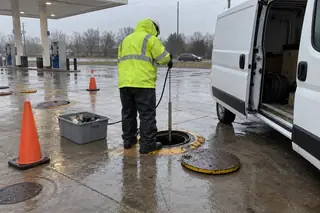
Contractor selection on this line is not interchangeable with the general contractor. Federal rules at 40 CFR 280.20 require owners and operators to make sure at least one of six methods shows the installation was done correctly, and to certify that on the notification form under 280.22. The six are an installer certified by the tank and piping manufacturers, an installer certified or licensed by the implementing agency, a registered professional engineer's inspection, an agency inspection, completed manufacturer installation checklists, or another method the agency accepts. Only the first two are credentials the installer holds, so ask a general contractor who will set the tanks and which method will be used before you sign. State lists such as tank installers in Georgia, North Carolina, Ohio and Pennsylvania let you put that question to more than one firm.
| Component | EPA figure | Notes |
|---|---|---|
| Double walled tank and piping, installed | $88,707 per tank (2006 dollars) | Tank included; new tanks and piping must be secondarily contained under 40 CFR 280.20 |
| Automatic tank gauge, installed | $4,098 (2012 dollars) | Release detection monitoring |
| Spill prevention equipment, replaced | $2,133 (2012 dollars) | One per fill point |
| Overfill prevention equipment, replaced | $1,931 (2012 dollars) | Weighted average; required under 40 CFR 280.20 before the system goes into service |
| Turbine sump, replaced | $3,199 (2012 dollars) | Containment sump at the tank top |
| Dispenser sump, replaced | $2,132 (2012 dollars) | Containment under the dispenser |
| Under-dispenser containment, new | $517 equipment plus $1,500 installation per dispenser (2008 dollars) | Required on every new dispenser system after April 11, 2016 |
| Tank tightness test | $418 (2012 dollars) | Interstitial integrity test $208 |
Which permits and federal tank rules apply?
Permitting is a cost line and a schedule line, and the schedule usually hurts more. The disclosures price it differently. Sunoco's APLUS estimate carries $21,000 to $83,000 for permits and $21,000 to $63,000 for architectural drawings. Holiday's carries $85,000 to $180,000 for construction plans and $30,000 to $100,000 for permits, deposits and related costs.
Federal tank rules attach the moment the system goes into service. Under 40 CFR 280.22, the owner has 30 days from bringing the tank system into use to file notification with the implementing agency, on EPA Form 7530-1 or the state equivalent. The system itself has to be built to 40 CFR 280.20: corrosion protection, spill and overfill prevention, secondary containment with interstitial monitoring, and containment under each new dispenser.
Secondary containment is required on any new build. Tanks and piping installed or replaced after April 11, 2016 must be secondarily contained and use interstitial monitoring. The Energy Policy Act 2005 asked for that only near a community water system or drinking water well, and only in states that chose that option, so the 2015 rule now reaches further. The same law required training for three groups of operators, which 40 CFR 280.241 calls Class A, B and C. Under 40 CFR 280.243, Class A and Class B operators designated after October 13, 2018 have 30 days from assuming duties, and a Class C operator has to be trained before assuming them.
Not every permit sits on the critical path. Building permits run on the local office's calendar, and your state's tank program may add its own steps, so call it early. A site that also stores more than 1,320 gallons of oil aboveground, counting only containers of 55 gallons or more, may need an SPCC plan under 40 CFR 112 if a spill could reach a waterway. Underground tanks that meet all of the federal UST rules do not count toward that total.
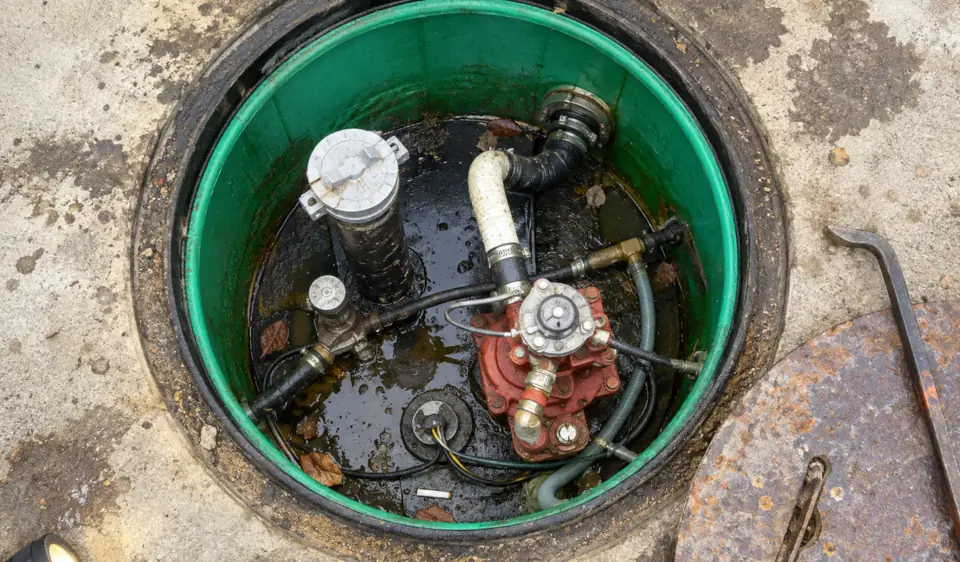
What does a gas station franchise add?
Branding is a fuel supply agreement first and a sign second. A branded site buys fuel under the brand's supply terms, accepts image and equipment standards, and gets a recognizable canopy and loyalty program. An unbranded site buys from a jobber on the open market and keeps its pricing freedom.
Entry fees are the first number most brand materials show and the least useful one to plan against. Circle K's 2026 disclosure lists a $25,000 initial franchise fee and a fuel security deposit of $30,000 to $125,000. Ask for the current Franchise Disclosure Document and read Item 5 for the initial fee, Item 6 for ongoing fees, and Item 7 for the brand's own low and high investment estimate.
The image package is the line that surprises people. The same brand's franchise agreement requires a remodel to its current image when it gives written notice, starting within three months, though extensive remodeling is generally not required more than once every five years. A franchise that looked affordable at signing can bring a remodel on the brand's schedule rather than yours, so get the image obligation in writing before you negotiate the entry fee.
Unbranded is not free money either. Which way the per gallon price difference between branded and unbranded supply points depends on your volume, your jobber, and whether the brand's rebates trigger. Decide before you order the canopy, because rebranding later means new signage, new dispenser wraps, and sometimes new dispensers.
| Factor | Branded | Unbranded |
|---|---|---|
| Initial fee | Set in Item 5 of the Franchise Disclosure Document; Circle K's 2026 FDD lists $25,000 | None |
| Ongoing royalty | Percentage of sales or cents per gallon, set in Item 6 of the FDD | None |
| Reported total investment | Item 7 of the FDD carries the brand's own low and high estimate | Set entirely by your own build budget |
| Fuel supply | Fuel supply agreement with the brand or its supplier, on that agreement's terms | Open market through a jobber, priced deal by deal |
| Pricing freedom | Constrained by brand expectations and rebate structure | Full control at the pump |
| Image and equipment standards | Remodel to the current brand image on notice, paid by the operator | None beyond code |
| Remodel timing | On the brand's schedule; Circle K generally limits extensive remodels to once every five years | None |
Can an SBA loan finance a new gas station?
Financing a new build is harder than financing a purchase, and the reason is collateral. A lender on an operating station can underwrite three years of fuel volume and inside sales. A lender on a ground up build is underwriting a forecast and a set of drawings, so the equity injection goes up and the diligence gets longer.
The SBA 7(a) program caps at $5 million. It can cover real estate, the fuel system, equipment, inventory, and working capital in one loan, which suits a project where the tanks and the building are the same transaction. On a 7(a) loan, SBA requires a start-up, a business operating one year or less, to inject at least 10 percent of total project costs. The 504 program lists gas stations as limited or special purpose property, so the borrower contributes at least 15 percent, or 20 percent when the project involves a new business. The 504 program fits better when the borrower already holds working capital and is buying mostly real estate and heavy equipment.
Environmental diligence is not optional on that loan. SBA's environmental rules look at the property's current and known prior uses, and a parcel that has held a gas station, NAICS code 457, must start with a Phase 1 environmental site assessment regardless of loan size. The cheaper records search with risk assessment is not available for such a site. Known contamination or ongoing cleanup bars approval and disbursement unless the risks are minimized to SBA's satisfaction. Mitigating factors include a no further action letter, an indemnity from a third party able to pay, cleanup fund approval covering the cost, or an escrow of at least 150 percent of the estimate.
Some builds should not be financed this way at all. Owners with an existing station and real equity often do better on a conventional commercial loan with fewer covenants and a faster close. What the government backed route buys is a lower cash requirement and a longer amortization on a purpose built asset nobody else particularly wants. That trade is worth more on a first location than on a fourth.
How long does it take to build a gas station?
Circle K's 2026 disclosure gives the only published new build figure we found: its franchisees typically open a newly built store 15 to 18 months after signing, and a converted store in 150 to 200 days. It names the usual causes of delay as leases, financing, building permits, zoning and local rules, weather, labor shortages, and late equipment, fixtures and signs.
The agreements set outer limits too. That filing expects a new build to be ready to open within two years of signing or of the brand's site approval, whichever is later, and Holiday requires opening within one year of signing. Rebuilding a fuel system on an existing site is a shorter job, because the store, the utilities and the zoning are already in place.
Start with the three numbers that decide the project. Get a written land price with an environmental contingency, a fuel volume forecast you can defend to a lender, and a separate fuel system bid from a tank installer that names the federal installation method. Take the tank bid first, because it carries the longest regulatory tail. What those gallons are worth once the site is open is a separate calculation, run in the gas station owner profitability guide.
Pull three bids on the fuel system before you sign for the land. Browse Texas UST contractors or Florida UST contractors by state, or request a quote with the parcel address, the tank count and sizes you are planning, and whether the site has ever held fuel before. That last answer changes what the bid has to cover. Choose New station construction as the project type. Installers are listed under tank installation in Texas, Florida, and California, and commissioning work under tank testing in Texas.