A site specific safety plan is required under 29 CFR 1910.120 for hazardous waste work. Also called a HASP, the written document governs any project involving hazardous substances or remediation of contaminated sites. Federal HAZWOPER rules require a project level plan for every uncontrolled hazardous waste cleanup, UST closure with contaminated soil, or emergency response operation.
A typical HASP runs 25 to 50 pages and covers hazard analysis, personal protective equipment selection, air monitoring procedures, decontamination zones, and emergency response. The HASP must be on site, accessible to every worker, and updated when conditions change. OSHA penalties for missing or deficient plans can exceed $16,000 per serious violation.
Most contractors confuse a corporate health and safety program with a HASP. The two serve different purposes. A corporate program governs company wide policy. A HASP governs one address, one scope of work, and one set of identified hazards. This guide explains required elements, who signs the plan, how to integrate it with daily tailgate briefings, and where OSHA state plan jurisdictions diverge from federal requirements.
The scope of a site specific safety plan is defined by 29 CFR 1910.120(b)(4)(ii), which lists ten required elements. Each element must reference the actual conditions at one project address, not industry boilerplate. A plan that names another job site or uses generic language fails on inspection. The compliance officer reviewing the document checks for specifics, not assurances.

What a Site Specific Safety Plan Covers
Coverage spans the full project lifecycle. Mobilization, drilling, excavation, sampling, tank removal, soil staging, transport, and demobilization each carry distinct exposure profiles. A HASP that addresses only the loudest hazard, such as excavation cave in risk, misses chronic chemical exposures that drive long term illness claims. Workers exposed to benzene during a tank pull face cancer risk decades after the project closes.
Hazardous substances trigger the rule. Petroleum constituents from leaking tanks, chlorinated solvents from former dry cleaners, lead from industrial demolition, and PCBs from old transformer pads all bring the project under HAZWOPER jurisdiction. Threshold quantities do not apply to the cleanup rule. If contamination is present and the work disturbs it, written documentation is required, regardless of the volume of contaminated media or the depth of excavation.
The HASP does not replace general construction safety obligations under 29 CFR 1926. The two standards overlap. The HASP must cite both where applicable, particularly for confined space entry, fall protection, and excavation safety. A separate excavation competent person designation under 29 CFR 1926.651 still applies even when the HAZWOPER plan governs.
HAZWOPER coverage is triggered by five categories of work listed in 29 CFR 1910.120(a)(1). Cleanup operations at CERCLA, RCRA corrective action, or state led sites fall under paragraph (a)(1)(i). Voluntary cleanups, treatment storage and disposal facilities, and emergency response to releases also qualify. Routine fueling at an active gas station does not. The trigger is the cleanup or release scope, not the type of facility.
When 29 CFR 1910.120 Requires a Written HASP
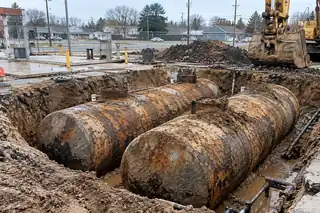
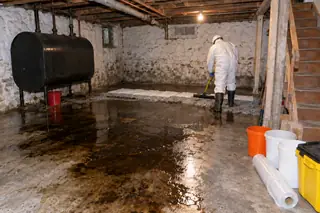
UST removal triggers the rule when contamination is known or suspected. A tank pulled at a residential heating oil property with no soil staining and clean field screening may proceed under construction safety alone. The same tank with visible product or detector readings above action levels shifts to HAZWOPER. The crew either holds 40 hour HAZWOPER training already or the work halts. Many contractors discover the trigger condition only after the bucket cracks the tank wall and product seeps into the trench.
Phase II investigation drilling, soil sampling, and groundwater monitoring on a known release site require a HASP. A Phase I ESA walkover does not, because no intrusive disturbance of contamination occurs. The transition point matters because tank decommissioning crews often hit unexpected staining mid excavation and must pivot to HAZWOPER protocols on the spot. A pre mobilization decision to operate under HAZWOPER from day one eliminates the scramble.
Emergency response is a separate trigger under paragraph (q). A fuel spill at a transfer point, an overfill at a delivery, or a release from a piping failure all activate emergency response provisions even if the site is otherwise compliant. Responders need their own training tier under paragraph (q)(6): at least 8 hours at the operations level, unless experience shows competency, and at least 24 hours for technicians and specialists. The incident commander needs at least 24 hours of training, and the employer must certify that person's competency under 1910.120(q)(6)(v).
29 CFR 1910.120(b)(4)(ii) lists the required elements that must appear in writing. The list includes health and safety hazard analysis, employee training assignments, PPE selection, medical surveillance, air monitoring, site control, decontamination procedures, emergency response, confined space entry, and spill containment plans. The HASP also identifies the site safety officer by name and the supervising emergency response coordinator. Both roles must be filled before work begins.
Required HASP Elements and Document Length
A working HASP typically runs 25 to 50 pages depending on site complexity. A residential heating oil tank pull with no known release may produce a 15 page plan. A former gas station site with multiple site assessment deliverables and active monitoring wells can require 60 pages or more. Length is a function of hazard count and operational diversity, not paper for its own sake. A short plan with full coverage of identified hazards beats a long plan padded with boilerplate.
Boilerplate kills enforceability. An OSHA compliance officer who finds the address of a prior job in your HASP, or finds generic chemical profiles unrelated to your contaminants, will cite the plan as inadequate. The 2024 enforcement letter program flagged copy paste HASPs as a leading deficiency in remediation citations. Compliance officers run keyword searches on common boilerplate phrases to spot reused documents.
Versions and revisions matter. The document must record the date of issue, the names of preparer and reviewer, and a change log. When scope expands, such as adding a confined space task or a new contaminant of concern, the HASP gets amended and the amendment is signed before that task starts. A plan that fails to track a mid project change becomes the prosecution exhibit one after an incident.
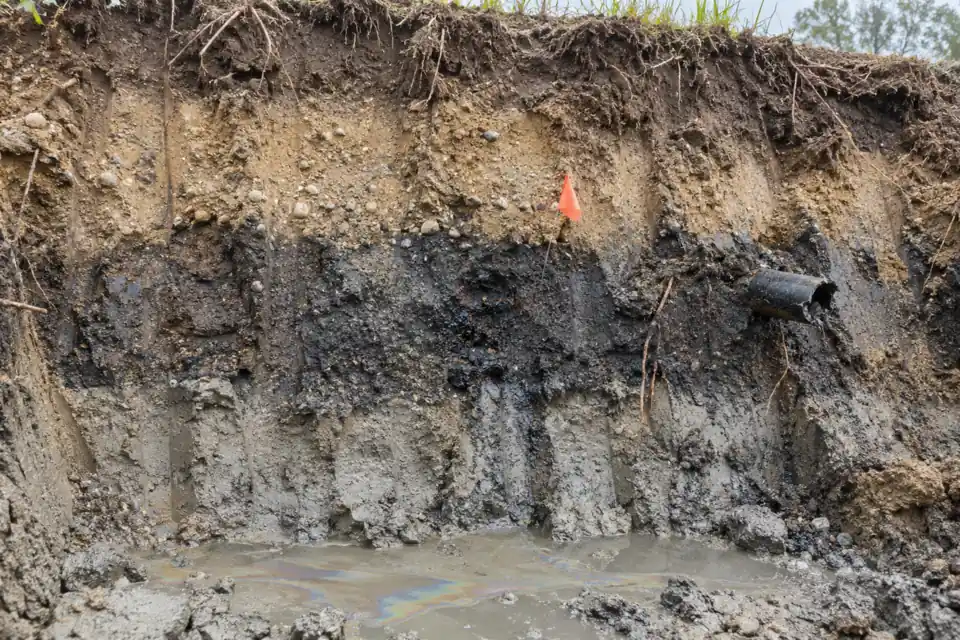
The hazard analysis section identifies every physical, chemical, biological, and radiological hazard expected at the project. Physical hazards include excavation cave in, struck by from heavy equipment, slips, and overhead utilities. Chemical hazards list the contaminants of concern with their CAS numbers, occupational exposure limits, and toxicity routes. The analysis ties each hazard to a specific task and a specific control, not to a generic mitigation phrase.
Hazard Analysis, PPE Matrix, and Air Monitoring
The PPE matrix translates hazards into protection levels. EPA Level A covers maximum respiratory and skin protection with a fully encapsulating suit and supplied air. Level B uses supplied air respirators with chemical resistant clothing. Level C uses air purifying respirators with cartridge protection appropriate to the contaminant. Level D is work uniform with no respiratory protection. The matrix specifies which level applies to which task and what conditions trigger an upgrade to the next level.
Air monitoring procedures must name the instruments, the calibration schedule, and the action levels. A photoionization detector reading above 5 ppm sustained may require Level C upgrade. A reading above 50 ppm may stop work pending re evaluation.
The document lists who reads the instrument, who logs the data, and where the log goes at end of shift. However, instrument selection depends on the specific contaminants. A PID misses non ionizable compounds and must be paired with other detection methods.
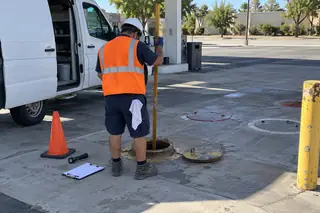
Real time direct reading instruments cover volatile organics. Personal sampling pumps cover full shift exposures for compounds with low action levels, such as benzene at 0.5 ppm. Lead work on demolition or tank installation near old painted equipment requires lead specific sampling under 29 CFR 1926.62. The HASP cites each applicable standard and identifies the certified industrial hygienist who reviews the data.
Decontamination Lines and Emergency Response
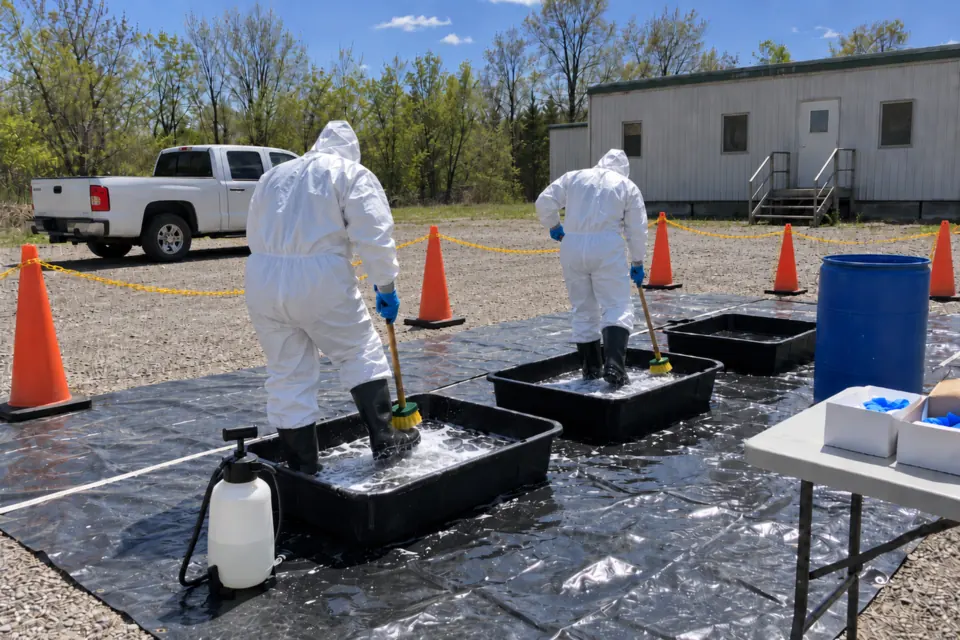
Decontamination procedures define the line workers cross from contaminated to clean. The standard configuration uses three zones. The exclusion zone is where contamination exists and where Level C or higher PPE is required. The contamination reduction zone is where workers shed PPE in a controlled sequence over a containment liner. Outside both, the support zone stays clean for break, storage, and command operations. The HASP must show this layout in a site diagram with measured distances.
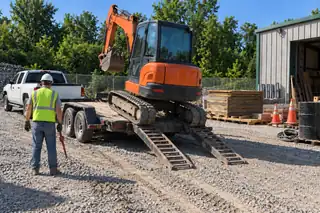
Equipment decontamination follows the same logic. Excavators that contact impacted soil need wash stations before leaving the exclusion zone. Sampling tools get cleaned between locations to prevent cross contamination. A HASP that lists wash equipment as needed without specifying the wash solution, the rinse procedure, and the disposal point for rinsate fails on review. Rinsate from petroleum work typically requires drumming and waste manifesting.
Emergency response covers fire, medical, chemical release, severe weather, and active shooter scenarios. Each scenario lists the trigger, the immediate action, the responsible person, and the off site notification chain. The local fire department, hospital, and ambulance service phone numbers belong in the plan with names of the actual facilities, not a generic 911 reference. Distances and route times to the nearest trauma center matter for chemical exposure response.
Evacuation routes, muster points, and accountability procedures get drawn on the site map. Workers practice the route before work starts, not after an incident. EPA emergency response guidance also calls for a backup muster point in case the primary is downwind of a release. Coordinates and physical address of both points belong in the plan. The site safety officer counts heads at the muster point and reports accountability to the incident commander.
Tailgate Briefings, Sign On, and Document Control
A HASP is useless if the crew has not read it. The sign on roster is the primary evidence of training. Every worker on site signs the roster, lists the date, and acknowledges that they reviewed the plan or received the briefing. Visitors and short term subcontractors sign in the same way. Missing signatures void the defense in a post incident enforcement action and shift liability from the worker to the employer.
Daily tailgate briefings are the operational layer that keeps the HASP active. A 10 to 15 minute briefing at the start of shift reviews the day tasks, the specific hazards, the PPE in use, the monitoring action levels, and the change since yesterday. The briefing is documented with a sign in sheet and a topic summary. Brief sheets get filed with the HASP for the duration of the project and retained for three years after closeout.
Document control matters when conditions change. A new contaminant of concern uncovered in mid project sampling triggers a HASP amendment. The amendment is dated, signed by the site safety officer, and re briefed to the crew before the new task starts. The old version stays in the file as a record of prior conditions. Inspectors track version history to confirm the plan kept pace with the work and that no task ran ahead of its written hazard analysis.
Many crews use a hardcopy binder on site plus a digital copy on the project manager device. Whichever format you choose, the contractors you work with should be able to produce the current signed version within five minutes of a request. A delay in producing the plan is itself a citation under 1910.120. Cloud based document systems with offline sync have become standard on multi week remediation projects.
OSHA State Plan Variations and Hiring a Contractor
OSHA operates as the federal floor. Twenty one states and Puerto Rico run OSHA approved State Plans under Section 18 of the OSH Act that cover private employers, and seven more plans cover only public workers. State plans must be at least as effective as federal OSHA, and several go further. California, Washington, Oregon, and Michigan all run programs that add requirements to HAZWOPER work beyond the federal baseline. A contractor moving between jurisdictions cannot assume that one plan satisfies all enforcement regimes.
California Cal OSHA requires an employer permit for trenches or excavations five feet or deeper that workers must enter, under Title 8 Section 341. Washington L&I imposes stricter air monitoring documentation. Oregon OSHA requires written notification of certain cleanup activities to the agency before work starts. A HASP written for federal jurisdiction may need significant rewrites when the work crosses into a state plan territory. State specific addenda to the master HASP are common on multi state remediation programs.
Verifying that a contractor maintains a current site specific safety plan and trained workforce is part of due diligence on any remediation project. Ask for a redacted sample HASP from a recent similar project, the names and 40 hour HAZWOPER training records of crew members, and the site safety officer credential. Compare what they provide against the elements listed in 29 CFR 1910.120(b)(4)(ii). For more on contractor selection, review how to choose a UST contractor and UST closure requirements for gas station owners.
To find contractors who maintain HAZWOPER programs and project level HASPs, browse find UST contractors by state. Filter for environmental remediation services. Ask about their HASP process during the bid stage. A contractor who cannot describe sign on, tailgate, and monitoring procedures in plain language likely does not run a real program, regardless of what their corporate brochure claims.