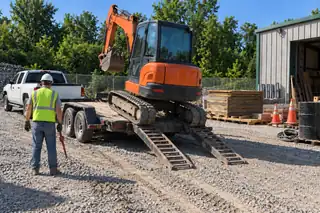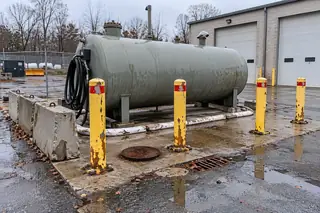
Competent person training prepares the worker OSHA requires to inspect excavations, whatever their depth. The regulation lives in 29 CFR 1926.650 through 1926.652 and names a designated authority responsible for soil classification, protective systems, sloping or shoring decisions, and the call to halt work when conditions deteriorate. Tuition runs $250 to $650 per worker, the OSHA compliance requirement applies to one supervisor on every active dig, and for UST removal crews mobilizing on petroleum contaminated sites, this is not paperwork.
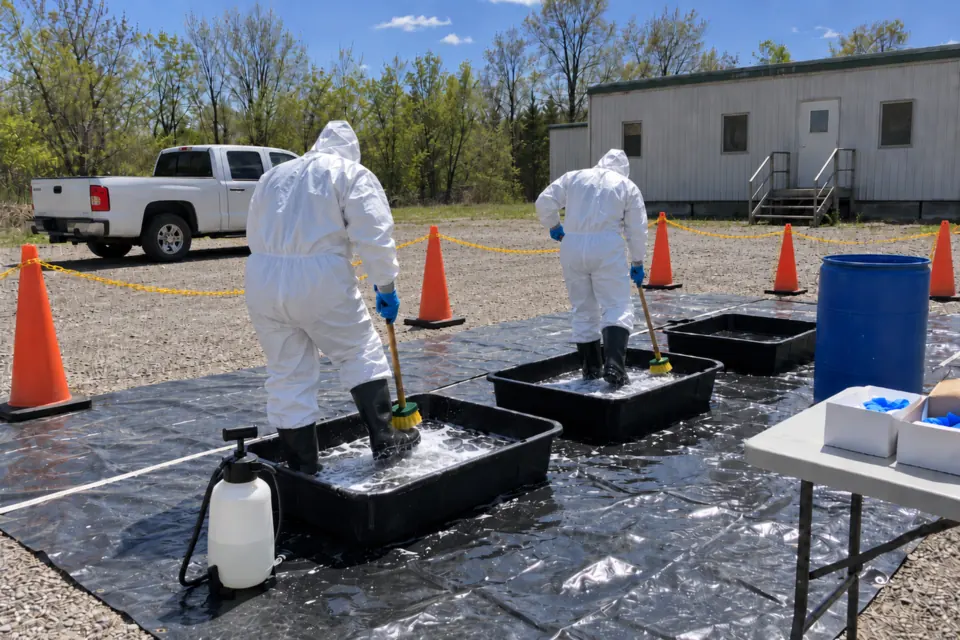
The role is technical, not administrative. The designated competent person reads soil samples, checks shoring deflection, classifies hazards in real time, and authorizes excavation entry. They carry the legal authority to stop the dig under 29 CFR 1926.32(f) the moment conditions deteriorate.
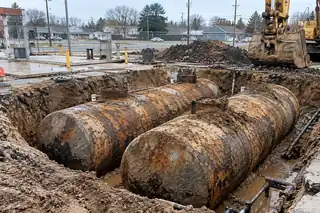
Tank removal sites raise the stakes. Petroleum vapors, contaminated soil, and unexpected utilities turn a trench 8 feet deep into a confined space hazard the moment a worker climbs in to cut a fitting. The competent person is the only one on site authorized to make the in the moment call about whether work continues, pauses, or stops.
This guide explains who qualifies for competent person training, what the curriculum covers, course costs, and how the role intersects with other OSHA standards binding UST work. The audience is the site manager who staffs the position, not the trainer who teaches it.

What OSHA Means by Competent Person Under 29 CFR 1926 Subpart P
OSHA's definition under 29 CFR 1926.32(f) names a competent person as one capable of identifying existing and predictable hazards in the surroundings and authorized to take prompt corrective measures. The word capable is doing heavy lifting in that sentence. It demands demonstrable knowledge and practical experience, not just classroom seat hours. A high school graduate with an OSHA 10 card does not automatically qualify, and a senior foreman with 20 years on excavation crews does not automatically qualify either.
Excavation specific duties are spelled out separately in 29 CFR 1926.651(k). The designated person performs daily inspections of excavations, adjacent areas, and protective systems before each shift begins and after any rainstorm, vibration, or condition that could increase hazards. Inspections also occur during the shift if work conditions shift materially. The frequency is not a suggestion.
OSHA also requires inspection as needed throughout the shift under the same paragraph. That clause matters on UST sites where soil conditions change as the dig progresses. A trench cut through dry sand at 7 a.m. may hit a saturated lens by 2 p.m. A buried clay layer might block water until the bucket breaks through, and water entering the excavation can change the classification within an hour.
The competent person designation is per site, not per company. If a contractor runs three crews on three jobs, three qualified individuals must be present on those sites every day work proceeds in excavations. The role cannot be designated by phone or email from the corporate office, and signing off on a daily inspection log from a different state is a citation waiting to happen.
Training Topics OSHA Requires for the Role
The competent person training curriculum is driven by 29 CFR 1926.21(b)(2), which requires employers to instruct each employee in hazard recognition and the means to control or eliminate hazards. For excavation work, that broad standard translates into five core topics every legitimate course covers. Trainers who skip any of these are leaving the contractor exposed at the next OSHA inspection.
Soil classification under Appendix A of subpart P comes first. Trainees learn the differences between Type A, B, and C soils, how to perform field tests including the thumb penetration test and pocket penetrometer readings, and how to handle layered or previously disturbed material. The classification rules are technical enough that most courses spend a full half day on this topic alone.
Protective systems form the second block. Sloping, benching, shoring, and shielding each have their own appendices labeled B, C, and D within subpart P. Trainees learn which protective system applies to which soil type, the maximum angles allowed for sloping, and when an excavation deep enough or unstable enough to fall outside tabulated data requires a registered professional engineer's design and signature.
The remaining topics include atmospheric testing for excavations over 4 feet that may contain hazardous atmospheres under 29 CFR 1926.651(g), water accumulation controls, access and egress requirements such as the 25 foot ladder rule, and inspection documentation. Most reputable providers fold in HAZWOPER training cross references because the two roles often overlap on contaminated tank sites where vapor monitoring drives the work plan.
Soil Classification and Why It Drives Every Other Decision
Soil classification is the gate that controls every other decision. Until the competent person classifies the soil correctly, no protective system can be legitimately selected. The slope angles, shoring pressure ratings, and shield ratings published in OSHA's tabulated data all key directly off soil type. Get the classification wrong and the rest of the plan inherits the error.
Type A soils are cohesive with an unconfined compressive strength of 1.5 tons per square foot or greater. Stiff clay typically qualifies. Type B sits at 0.5 to 1.5 tsf and includes silt, sandy loam, and dry unstable rock. Type C is cohesive soil at 0.5 tsf or less, granular soil such as gravel, sand, or loamy sand, and submerged soil or soil with freely seeping water, per Appendix A. Each classification carries its own slope and shoring requirement.
Previously disturbed soil can never be Type A, and it is Type B unless its own properties make it Type C under Appendix A to subpart P, which is the rule that snags UST removal crews most often. Any excavation backfilled around a buried tank is, by definition, disturbed. The competent person cannot treat that material as Type A, and sand or gravel backfill is Type C on its own properties even if visual inspection suggests otherwise. This trips up rookies on oil tank removal jobs.
Classification is not a one shift task. OSHA expects at least one visual analysis and one manual analysis per Appendix A. Visual indicators include color, texture, fissures, and water seepage. Manual tests range from thumb penetration to plasticity ribbon to laboratory unconfined compressive strength readings. Most trainers cover the practical field tests in roughly 90 minutes of hands on instruction, but field application takes years to develop.
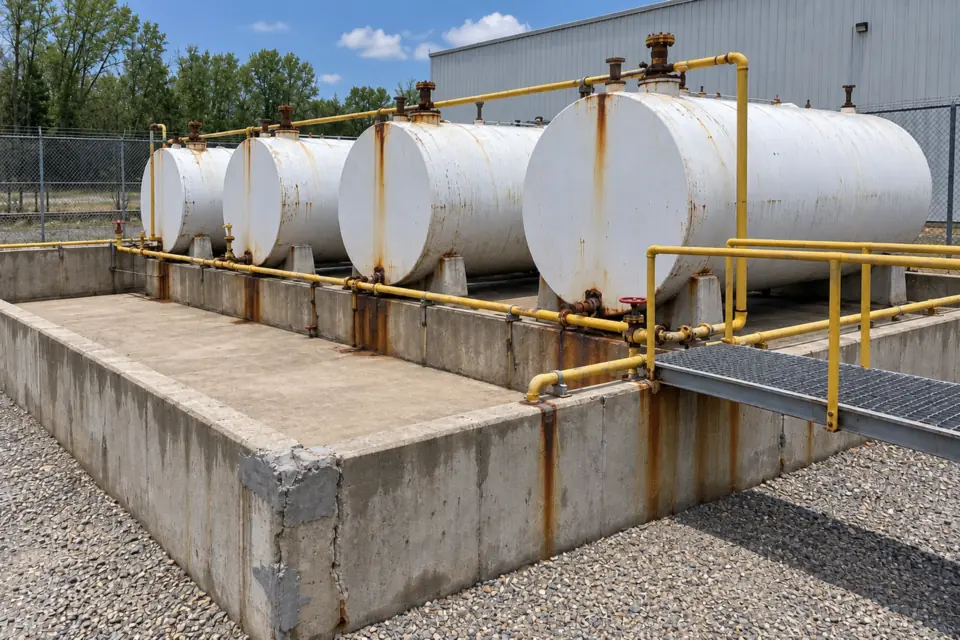
Protective System Selection on UST Excavation Sites
Once soil is classified, the competent person selects a protective system from OSHA's option tree under 29 CFR 1926.652. Three families exist: sloping or benching, shoring, and shielding such as trench boxes. Each family carries restrictions tied to soil type and excavation depth, and each appears in its own dedicated appendix with tabulated dimensions.
Sloping has the cleanest math but eats the most footprint on site. Type A allows 53 degrees from horizontal, Type B allows 45 degrees, and Type C allows 34 degrees, all under Appendix B's tabulated data. On a trench 10 feet deep in Type C, that translates to roughly 15 feet of horizontal cut on each side. The soil excavation calculator turns those dimensions into cubic yards and truckloads. Urban UST sites rarely have that kind of real estate to spare.
Shoring and shielding are the practical defaults on tight sites. Hydraulic shoring pressures, timber shoring sizes, and trench shield ratings all live in Appendix C and Appendix D. The competent person verifies the manufacturer's tabulated data is physically on site and matches the actual soil classification before any worker enters. Without that paperwork, the system is non compliant even if the equipment itself looks bulletproof.
Excavations deeper than 20 feet require a registered professional engineer to design the protective system. The competent person can no longer pull dimensions from tabulated data alone at that depth. This rule applies to deep tank pits where the bottom of the excavation reaches into ground water, a common condition on commercial gas station decommissioning jobs where water tables sit high.
Daily Inspection Authority and When to Stop Work
29 CFR 1926.651(k)(1) requires daily inspections by the competent person before each shift, after every rainstorm, and after any event that could increase hazards. The word event is intentionally broad. Vibration from nearby pile driving, a leaking water main, freeze thaw cycles, or a passing thunderstorm all qualify. Each triggers a fresh inspection regardless of whether the morning walk through already happened.
The inspection is not a clipboard exercise. The competent person walks the perimeter and looks for tension cracks. They check shoring for deflection, measure water accumulation, and verify the spoil pile sits at least 2 feet back from the edge under 29 CFR 1926.651(j)(2). Ladder placement is confirmed under 1926.651(c)(2), and the spacing requirement is a maximum lateral travel of 25 feet.
When the inspection turns up a hazard, work stops. OSHA's stop work authority is not a courtesy or a soft recommendation. Under 29 CFR 1926.651(k)(2), exposed workers must be removed from the hazardous area until the necessary precautions have been taken. Citations for failure to act on a known hazard run between $16,000 and $160,000 per violation under repeat or willful classifications in the 2026 penalty schedule.
Inspection records are not strictly required to be written under subpart P itself, but OSHA inspectors routinely expect documentation when a hazard is later identified. Most well run contractors use a daily checklist or photograph each inspection point, keeping a paper trail that survives a post incident review. UST removal contractors typically pair the excavation log with the closure paperwork required by state UST authorities.
Where to Get the Training, What It Costs, How Often
Course providers fall into three tiers. National training organizations such as the National Safety Council and OSHA authorized outreach trainers run 8 to 16 hour courses ranging from $250 to $450. Trade associations including the Associated General Contractors and the National Utility Contractors Association offer longer programs at $400 to $650 with practical field components and equipment time built in.
Equipment manufacturers including United Rentals and Efficiency Production deliver competent person training tied to their shoring and trench box products. Cost runs $300 to $500 and includes hands on time with the actual equipment crews will deploy. This format suits contractors standardizing on a specific shoring system, since the training applies directly to the equipment that shows up on the job.
OSHA does not set a fixed recertification interval for the excavation competent person role. Many employers adopt a three year refresher cycle to match the cadence used for other safety credentials. Insurance carriers sometimes mandate annual updates as a condition of policy renewal, particularly on jobs with excess liability layers over $5 million or work near schools, hospitals, or active gas stations.
State plan states can impose stricter training rules than federal OSHA. California's Cal/OSHA, Washington L and I, and Oregon OSHA each issue their own excavation standards that mirror but sometimes exceed 29 CFR 1926 subpart P. Contractors browsing the California UST contractor directory or bidding tank installation in Washington projects face dual rules. They must verify both the federal baseline and the applicable state plan requirements through OSHA's state plan reference page before mobilizing crews.
How This Role Connects to Other UST Site Requirements
Excavation competent person is one of several OSHA designations that often land on the same individual on a UST site. HAZWOPER under 29 CFR 1926.65 and the confined space competent person and entry supervisor roles under 29 CFR 1926 Subpart AA frequently overlap because tank removals trigger multiple hazard classes at once. Subpart AA can reach entry into the tank itself, but 29 CFR 1926.1201(b)(1) leaves the excavation to Subpart P. One person stacking three credentials is common.
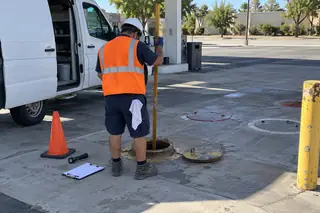
Vapor monitoring inside an open excavation can push the work into permit required confined space territory if oxygen levels drop or LEL readings climb above 10 percent. The competent person calls that boundary in real time. Knowing the moment an excavation legally becomes a confined space is one of the more expensive judgment calls in tank removal, since the wrong call leads to either citation or a worker exposure.
Operator training under 40 CFR 280 subpart J is a separate certification from competent person designation. UST operator training focuses on facility operation rather than construction safety, and the credential is held by the facility's A and B operators rather than the contractor's excavation crew. The two roles overlap on closure paperwork during tank pulls but do not substitute for each other in any way.
For property owners planning a tank pull, the practical question is whether the contractor's competent person designation is documented and current. A reputable contractor produces the certificate on request without hesitation. To start that conversation, request a quote or browse our directory of UST contractors and ask about excavation safety credentials during the screening call. The answer tells you whether the bidder takes OSHA seriously or treats it as a checkbox.