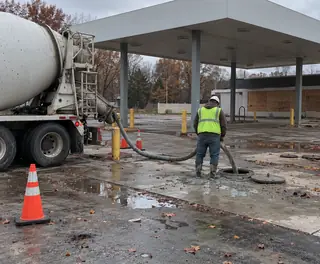
Fleet fuel management tracks every gallon pumped across company vehicles, generators, and on site tanks. For a 50 vehicle fleet, unauthorized use and shrinkage typically cost $15,000 to $40,000 per year. A basic fuel tracking system pays back in 9 to 14 months when the install is scoped correctly.
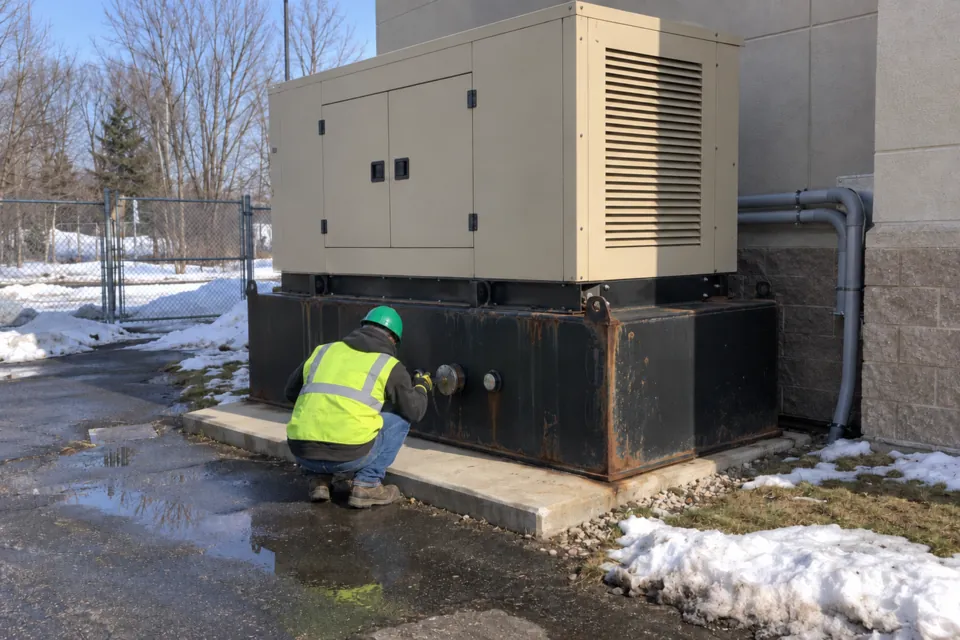
The discipline spans hardware, software, fuel cards, on site storage tanks, compliance reporting, and the people who run daily reconciliation. Each layer produces data that feeds the next, and a weak link corrupts the downstream dataset by month end.
This guide covers how each component works and what a fleet should budget for at each tier. It also walks through the specific compliance rules under 40 CFR 280 that govern any regulated tank at a private fueling yard. Federal, state, and local rules, including SPCC planning under 40 CFR 112 and RCRA used oil handling for filter waste, all layer into the compliance stack.
Early architectural choices set the operating cost floor for the next decade of fleet fueling across every site and every vehicle.

What fleet fuel management actually involves
Fleet fuel management covers four distinct functions that often sit in four different vendor systems. Fuel inventory management tracks how much product sits in each on site tank. Dispatch and telematics track which driver pulled how many gallons against miles driven. Accounting reconciles fuel card purchases against delivered fuel and driver advances. Compliance maintains release detection records, operator certificates, and inspection logs for state audits.
When a single platform ties these functions together, month end reporting takes minutes instead of days. When they stay siloed, fuel loss hides in the gaps between spreadsheets. A carrier running 200 Class 8 trucks can lose 3 to 5 percent of annual fuel spend to reporting gaps alone. That six figure variance eventually shows up in the EBITDA reconciliation.
The real choice is rarely about a single product but about picking a primary system of record and feeding every other data source into it on a defined schedule.
The hub is usually either a wetstock platform on the tank side or the telematics platform on the vehicle side. Picking wrong forces expensive rebuilds two years later when the fleet outgrows its initial architecture. Wetstock first suits fleets with heavy on site fueling, and telematics first suits fleets that refuel mostly at retail cardlock stations.
Fuel management system hardware and software components
A modern fuel management system combines an automatic tank gauging probe, a dispenser controller, a driver identification method, and a cloud reporting layer. Veeder Root TLS-450PLUS and TLS4 consoles dominate the in tank gauging market. OPW SiteSentinel Nano and Gilbarco Passport controllers sit next to them at most cardlock and private fleet sites. These four brands cover roughly 80 percent of the installed base across commercial fueling.
The probe measures fuel height, water bottom, and temperature inside each tank every few minutes. Those readings feed into the fuel management software that compares book inventory against measured inventory and flags variances. The software produces a statistical inventory reconciliation report accepted under 40 CFR 280 Subpart D, and the same dataset feeds IFTA tax filings and insurance audit responses.
Driver identification runs through RFID fobs, PIN entry at the dispenser, or a fuel card swiped at the pump. The choice sets the ceiling on theft control. RFID fobs cost $8 to $20 per driver and eliminate shared PIN fraud that chronically leaks data quality in larger fleets with overnight shift changes.
The software layer is where return on investment shows up. A $4,000 to $9,000 per year subscription for cloud based reporting pays for itself the first time it flags an unauthorized Sunday fill at a private yard tank. Some installers bundle hardware procurement with the software kickoff, so the fleet signs one contract instead of four.
Automatic tank gauging and fuel inventory management explained
Automatic tank gauging, abbreviated ATG, is both a hardware category and a regulatory category. As hardware, an ATG probe replaces manual stick readings with continuous measurement every 15 minutes. As a compliance method, automatic tank gauging meets the monthly release detection requirement when it follows 40 CFR 280.43(d), including a test at least every 30 days that can detect a 0.2 gallon per hour leak. The rule sets no tank size limit, but tanks installed after April 11, 2016 must use interstitial monitoring instead.
Fuel inventory management is the business layer built on top of ATG data. A properly configured workflow reconciles deliveries, dispenses, and an end of day stick against the ATG book inventory every 24 hours. A variance over 1 percent on any given day triggers an internal review. Under 40 CFR 280.43(a), the federal inventory control method, a monthly variance above 1.0 percent of flow-through plus 130 gallons must be reported as a suspected release under 40 CFR 280.50, unless a second month does not confirm it.
Every ATG install sends alarms, and learning which alarms matter separates a productive wetstock program from alarm fatigue that dismisses everything.
Common false alarms include temperature compensation swings during summer deliveries, water sensor triggers from monthly line flush tests, and low product alarms when a driver forgets to log a delivery. Real alarms, sudden loss events, unexplained water ingress, and continuous high level alarms demand immediate action. In Texas, for example, a suspected release must be reported to TCEQ within 24 hours and investigated within 30 days under 30 TAC 334.72 and 334.74. The figures come from the state's own rule. Sites with documented release history should price in tank inspection and testing before assuming the ATG alone clears them. Cold-weather fuel quality is its own alarm source: if your region sees single-digit lows, the winter diesel gel calculator converts a forecast low into the kerosene blend or additive dose that keeps stored diesel flowing.
Fleet fuel cards, fuel reconciliation, and cost control
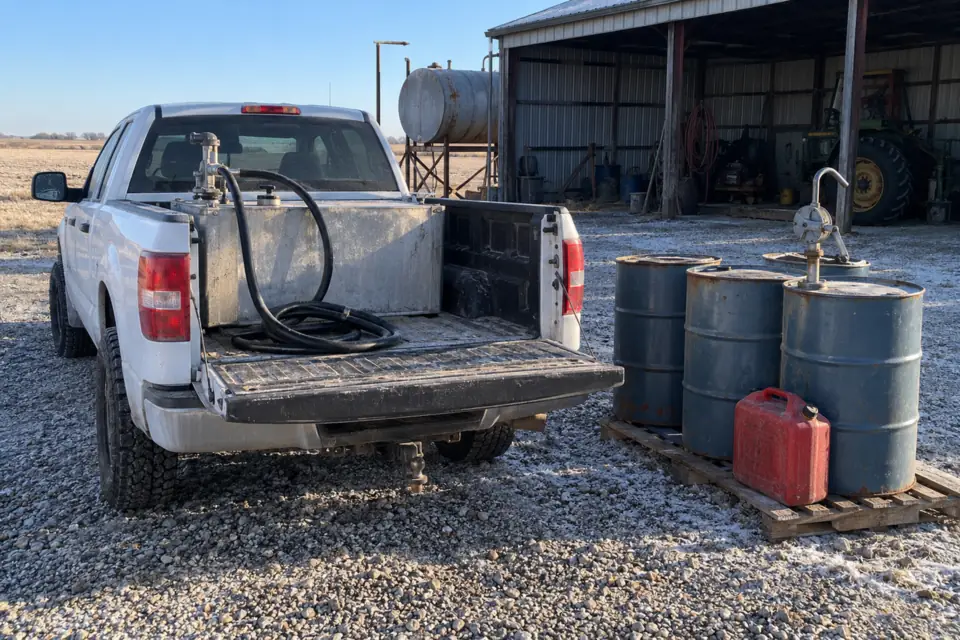
A fleet fuel card is essential only when vehicles fuel at retail sites rather than private cardlock. The two largest fuel card networks, WEX and Comdata, together accept at over 95 percent of retail stations and all major truck stops in North America. Each card locks purchases to a single vehicle and captures odometer, product grade, and gallons per transaction in near real time.
Fuel reconciliation is the monthly process of matching card transactions, on site tank dispenses, and telematics mileage against recorded consumption. A clean reconciliation produces a consistent miles per gallon figure for every vehicle. A dirty reconciliation means either a leak, a data feed failure, or an employee running a side business on the company pump late at night.
Exception reporting inside the fuel management software flags transactions outside fleet policy. Common exception triggers include after hours purchases, multiple fills within 2 hours, gallons in excess of tank capacity, and purchases of premium fuel on a diesel only vehicle. A single exception report reviewed weekly catches 80 percent of theft before it becomes a material loss on the profit and loss statement.
Integrated platforms tie the fuel card feed into the same dashboard as the on site tank telemetry. That lets a single operator reconcile retail purchases and wetstock variance from one screen, instead of exporting two CSV files and running a VLOOKUP in Excel every month end. Annualized, this single integration saves 100 to 200 labor hours inside a typical 100 vehicle operation and shortens the close cycle.
Fleet fuel management system costs and ROI
Fleet fuel management pricing falls into three tiers. Entry level fuel tracking system software for a 10 to 25 vehicle fleet runs $1,200 to $3,600 per year with no hardware included. Mid tier fuel monitoring system deployments covering hardware, software, and installation run $8,000 to $25,000 up front plus $4,000 to $12,000 in annual subscription. Enterprise installs with redundant telemetry, multi site reporting, and full API access run $50,000 to $200,000 per site.
Hardware cost drivers include the ATG console, probe count per tank, dispenser controllers, driver ID hardware, and the labor to wire everything into the site network. A single site retrofit for a 4 tank cardlock operation typically runs $12,000 to $28,000 in hardware plus $4,000 to $8,000 in installation labor. Permits, trenching, and any needed dispenser upgrades can add another $5,000 to $15,000 depending on local code. Budget an extra 15 percent for scope creep on any retrofit inside an active site. Dispenser islands and piping runs are never exactly where the as built drawings show them.
Payback discussions usually stall on where to count the savings. Hard savings include fuel loss prevention, labor hours saved on reconciliation, and fine avoidance from missed compliance reports. Soft savings include faster close cycles, better wholesale rate negotiation, and executive visibility into fuel spend that slowly changes buying behavior. Most CFOs will credit only hard savings in the initial business case, which tends to understate the real economic return by 30 to 40 percent.
A 100 vehicle fleet that recovers 2 percent of annual fuel spend saves $60,000 to $90,000 per year at current diesel prices. Against a $30,000 total first year cost for a mid tier fuel management system, payback arrives in 6 to 9 months and every subsequent year is pure margin recovery. This economic logic is why operators coordinating oil tank removal at a private yard bundle the new telemetry into the same capital request.
Regulatory compliance for fleet fueling systems and fuel reporting
Under 40 CFR 280.12, an on site fuel tank is an underground storage tank when at least 10 percent of its total volume, including connected underground piping, is below the ground surface. UST systems of 110 gallons or less are excluded under 40 CFR 280.10(b)(4). Above ground tanks fall under the Spill Prevention, Control, and Countermeasure rule, known as SPCC, at 40 CFR 112 once total site storage exceeds 1,320 gallons. Most private fleet yards with their own fueling hit at least one of these two thresholds.
Release detection, spill prevention, overfill prevention, corrosion protection, and financial responsibility are the five regulatory pillars for a regulated UST. A fuel monitoring system that does not produce a defensible leak record costs the owner a violation notice under EPA enforcement authority. Under 40 CFR 19.4, each violation of the federal UST rules can cost up to $29,980 per tank per day in civil penalties, and states layer their own penalties on top.
Operator A, Operator B, and Operator C training certifications required under the Energy Policy Act 2005 cover an owner designated operator, a daily operator, and an emergency responder. Training runs $200 to $600 per operator and must be refreshed every 3 years in most states. Missed deadlines on these and other UST rules are mapped in the UST compliance deadlines guide.
Fire code compliance under NFPA 30A governs above ground motor fuel storage, setback distances, and spill containment at private fleet yards. Clean Air Act 1990 Stage II vapor recovery still applies in some legacy nonattainment areas despite EPA's 2012 national waiver. Used oil from filter changes at the same yard falls under the used oil rules at 40 CFR 279, and used oil with more than 1,000 ppm total halogens is presumed to be hazardous waste unless that presumption is rebutted. Confirm the local rules with contractors in your state before scoping any new install.
How to choose a fleet fuel management provider and your next step
Start by listing what the fleet fuel management platform must actually do, in priority order. A 30 truck food distributor with one 10,000 gallon diesel tank needs a different system than a 400 truck regional carrier with 8 cardlock sites across 3 states. Match the platform to the problem set, not to the pitch deck or the vendor's existing install base. Write the top five functional requirements on paper before taking a single demo.
Veeder Root, OPW, and Gilbarco dominate the hardware side because their consoles integrate cleanly with every major wetstock platform. Software vendors split into two groups. Wetstock specialists such as Titan Cloud and SMARTank focus on tank accuracy, variance reporting, and compliance. Fleet specialists such as Geotab and Samsara approach fuel from the vehicle side and integrate fuel tracking system data into broader fleet telematics. Pair both when the fleet operates its own yard tanks and also refuels on the road.
Pilot the system on one site or one vehicle group before a fleet wide rollout. A 90 day pilot reveals integration gaps, training shortfalls, and data quality issues that the sales cycle buried. Pilot scope should include one full reconciliation cycle, one delivery event, and one intentional exception to test the exception reporting path in production.
Bring in a licensed UST contractor before signing the vendor contract if the deployment touches tank hardware. A qualified installer flags site conditions the software vendor cannot see from a pitch deck. The contractor selection playbook covers the credentials that matter, and requesting a quote from a vetted local professional pressure tests the vendor bid against real install pricing. Start with two independent bids from regional installers before the vendor demos turn into a purchase order.