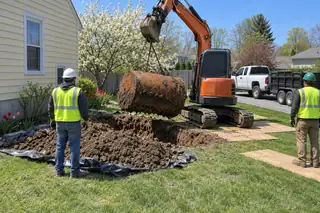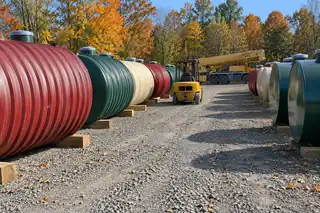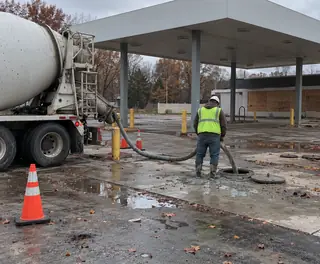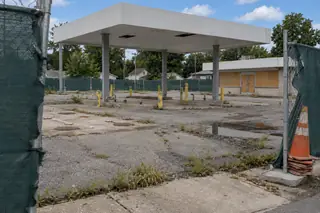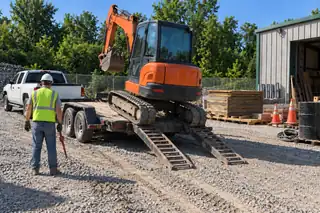
A confined space entry permit is OSHA 1910.146's written authorization before tank entry. Common examples include an underground storage tank, a sump vault, or a fuel pipeline manhole. OSHA documented 670 permit space fatalities between 2011 and 2018, and more than half of those who died were rescuers attempting unplanned entries.
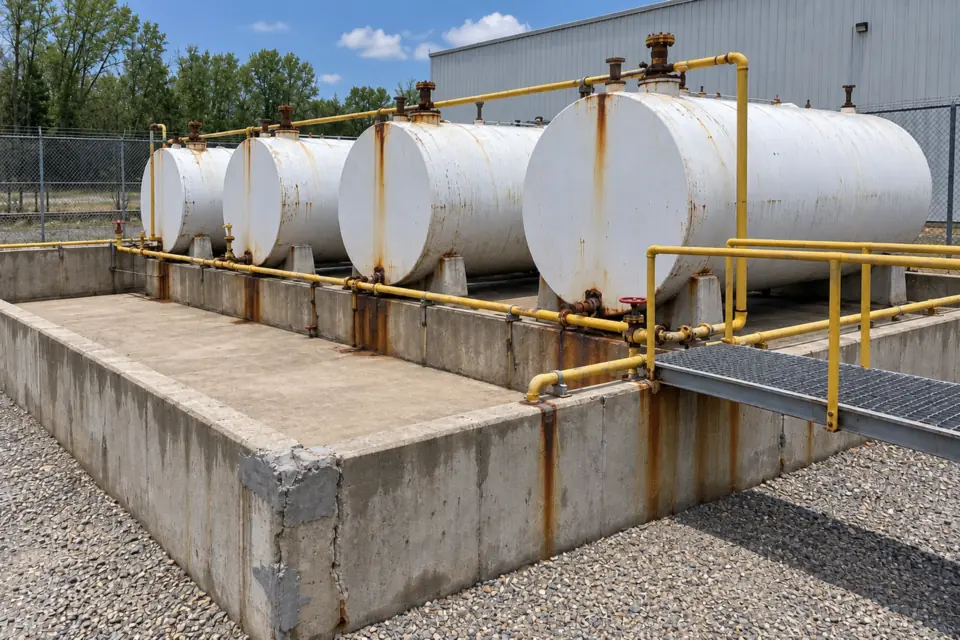
A defective permit can trigger OSHA citations starting at $16,131 per serious violation under the 2026 penalty schedule. UST crews running closure, cleaning, or tank decommissioning work face permit obligations on most projects. The cost of an error compounds across a single inspection cycle. This guide explains the trigger conditions for permit required spaces, atmospheric testing benchmarks, the 15 required permit elements under 1910.146(f), entrant and attendant duties, and rescue planning. It closes with state OSHA plan variations and the construction rule at 29 CFR 1926 Subpart AA.
Whether you supervise a closure dig, a pump room retrofit, or a routine tank inspection, this signed authorization is the first artifact OSHA reviews after an incident. Skip one test value and the record becomes legally indefensible. Get the permit right and downstream documentation falls into place.
Under 29 CFR 1910.146, a confined space has three defining traits. It is large enough for a worker to enter and perform assigned work. It has limited or restricted means of entry or exit. It is not designed for continuous human occupancy. A 10,000 gallon steel UST satisfies all three on its face, and so does a sump vault or a tight pump pit.

What Triggers a Permit Required Confined Space Under OSHA 1910.146
The space becomes permit required, often abbreviated PRCS, when it adds at least one of four conditions. A hazardous atmosphere, present or potential, is the first. Material capable of engulfing an entrant, such as loose sludge or grain, is the second. Converging walls or a sloping floor that could trap a worker count as the third. Any other recognized serious safety or health hazard satisfies the fourth condition.
Empty does not mean safe. A drained heating oil tank can hold a residual gasoline or diesel atmosphere well above the lower explosive limit for days after pumping. Vapor space in a recently cleaned oil tank removal project routinely shows LEL readings of 20 to 40 percent before active ventilation is applied. A meter sweep across the manway is mandatory before any worker drops below grade.
Reclassification to non permit status is allowed under 1910.146(c)(7), but only if the hazardous atmosphere can be fully eliminated and the space contains no other listed hazard. Most UST related entries cannot meet this bar. Residual product, weathered sludge, and recurring vapors keep the atmospheric hazard alive throughout the work shift. Documenting the elimination test is itself a permit equivalent paperwork burden.
Atmospheric testing under 1910.146(d)(5) follows a strict order. Oxygen first, then combustible gases and vapors, then toxic gases and vapors. The order matters because the LEL sensor in most 4 gas meters relies on oxygen for accurate combustion. A depleted atmosphere will produce a falsely low LEL reading that hides the real explosion risk.
Atmospheric Testing: Oxygen, LEL, and Toxic Gas Limits
OSHA accepts an oxygen range of 19.5 to 23.5 percent for entry. Below 19.5 percent the atmosphere is oxygen deficient and capable of causing impairment within minutes. Above 23.5 percent the atmosphere is oxygen enriched and dramatically lowers the ignition threshold for flammable vapors. Even a brief excursion to 24 percent oxygen in a vapor saturated tank can convert a routine cleaning task into an ignition source event. Both endpoints trigger the same permit shutdown rule.
Flammable vapor must read under 10 percent of the lower explosive limit. Crews measure with a calibrated 4 gas meter in a standard configuration of O2, LEL, CO, and H2S. Toxic readings are benchmarked against OSHA permissible exposure limits in 29 CFR 1910.1000 and the substance standards it points to. Benzene at 1 ppm time weighted average under 1910.1028 and hydrogen sulfide at a 20 ppm ceiling in Table Z-2 are the values most relevant to UST work.
Test repetition cadence is dictated by site conditions, not arbitrary clock times. Continuous monitoring is the safer default for any space with active product vapor sources. Pre entry testing alone is rarely sufficient on tank interiors. Pumping out, cleaning, and torch cutting all alter the internal atmosphere within minutes. Bump test the meter against a known calibration gas at the start of each shift.
Section 1910.146(f) requires the written confined space entry permit to capture 15 distinct data points before the first worker enters the space. The required fields include the space identifier, entry purpose, entry date, and authorized duration. They also include the names of entrants and attendants, a supervisor signature, hazards identified, isolation measures, and atmospheric test results. The remaining fields cover ventilation procedures, communication method, rescue arrangements, equipment used, and any companion permits such as hot work authorization.
The Entry Permit Document and Its 15 Required Elements
Entry duration cannot be open ended. Most employers set permit validity at a single shift. This aligns with the standard's intent under 1910.146(f)(8) that the supervisor cancel the permit once entry operations are complete. The cancellation entry should note whether work ended normally or was terminated due to a hazard reading or equipment failure. A new confined space entry permit is required for the next shift, even if conditions appear unchanged.
Each atmospheric test entry on the permit needs three pieces of information. They are the gas tested, the reading recorded, and the exact time stamp. Listing only the pass or fail decision is the most common defect found during OSHA permit reviews. Without the recorded numerical reading, the supervisor cannot defend that decision later.
Posting and retention rules matter as much as content. The permit must be available at the work portal so attendants and rescue teams can read it without searching. After cancellation the employer must retain canceled permits for at least one year. The retention period supports the annual program review under 1910.146(d)(14) and helps identify trends and recurring deficiencies.
Section 1910.146 assigns three distinct roles for any permit entry. An entry supervisor authorizes work, verifies that required tests and isolation measures are complete, signs the permit, and terminates operations when conditions change. The supervisor is the legal owner of the entry decision. A signature is not delegable to a foreman or a project manager.
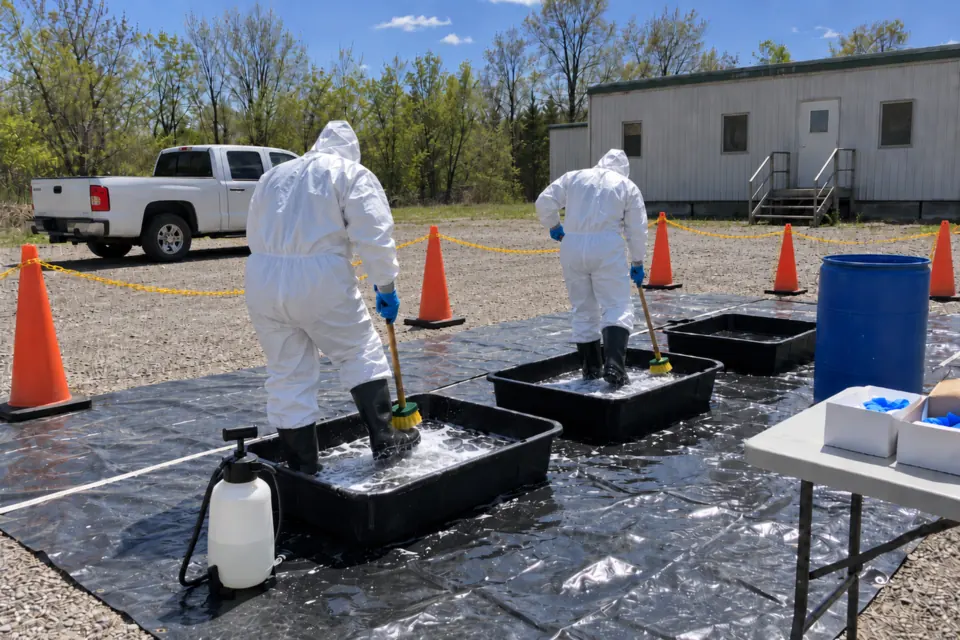
Roles and Duties of the Entrant, Attendant, and Entry Supervisor
The authorized entrant performs work inside the space and wears the required PPE plus an atmospheric monitoring instrument. They communicate continuously with the attendant and exit immediately when ordered or when they detect a hazard. Entrants need documented initial training before duties are assigned. Refresher training follows whenever a procedure changes.
Attendants station outside the portal and track each entrant continuously. The attendant role performs no other duties that distract from monitoring. Many UST contractors miss this rule by assigning the attendant to operate vacuum trucks, log paperwork, or guide vehicle traffic. OSHA cites this overlap routinely during enforcement inspections.
Attendants do not enter the space during a rescue under almost any condition. The only exception is a trained, equipped, and authorized internal rescue team operating under written procedures. The default response is to summon outside rescue services and operate retrieval equipment from outside the portal. When you vet a UST contractor, confirm this discipline is documented in its written program.
Section 1910.146(k) requires the employer to evaluate prospective rescue services before authorizing entry. Calling 911 alone does not satisfy the rule. The evaluation must confirm that the rescue service can respond in a timely manner given the hazards expected. It must also confirm the service has the right equipment and has practiced rescues from spaces similar in configuration to the actual entry space. Pre arrangement should be documented in writing before any permit space work is scheduled.
Rescue Plan and Retrieval Equipment Standards
Retrieval systems or methods are required whenever an entrant goes into a permit space, unless the equipment would increase the overall risk of entry or would not help the rescue. Vertical spaces more than five feet deep also need a mechanical retrieval device on hand under 1910.146(k)(3). The system uses a full body harness attached to a retrieval line. The line connects to a mechanical device, typically a tripod and winch, positioned outside the portal.
Employees designated as rescuers must practice a permit space rescue at least once every 12 months, from the actual permit spaces or representative ones, under 1910.146(k)(2)(iv). The drill uses a dummy, manikin, or live subject. Many municipal fire departments will not commit to this practice schedule for private spaces. That leaves the employer two options: arrange a contractual rescue provider, or build a documented internal team.
Safety Data Sheets for every product expected inside the space go to the receiving medical facility along with the rescue team. This requirement under 1910.146(k)(1)(iv) shortens the time the receiving hospital needs to start targeted treatment. A printed SDS in the permit packet is the fastest way to satisfy the rule. Field staff should review SDS contents before each entry.
Federal OSHA covers private sector employers in 28 states. The remaining 22 states and territories operate approved state OSHA plans under section 18 of the OSH Act. State plans must be at least as effective as federal OSHA but may impose stricter requirements. California, Washington, Oregon, and Michigan are the four state plans most known for stricter permit space rules.
State OSHA Plan Variations and Construction Rule Differences
Cal/OSHA Title 8 Section 5157 adopts the federal 1910.146 structure, including the written permit program. Its rescue rules track the federal ones but add a trained standby person at the site who is immediately available for rescue. It does not call for a rescue plan signed by the rescue service provider. Construction crews on California oil tank removal and California tank decommissioning projects instead follow the Construction Safety Orders confined space rules that begin at Section 1950. Penalties under Cal/OSHA run higher than the federal baseline.
Construction work follows a parallel rule at 29 CFR 1926 Subpart AA, published by OSHA in 2015. Subpart AA borrows most of 1910.146 but adds construction specific provisions for controlling authority coordination. The host employer, controlling contractor, entry employer, and rescue service must share hazard information before work begins. On joint UST excavation jobs the controlling contractor coordinates entry authority across multiple subcontractors performing parallel work in the same space. UST removal often falls into construction jurisdiction, particularly when entry is part of a broader excavation project.
Washington state under WAC 296 809 and Oregon under OAR 437 002 0146 take a similar approach to California. Both layer recordkeeping and rescue verification requirements on top of the federal baseline. Crews running Washington UST work and Oregon UST work need to map their entry programs to the state plan, not the federal text alone. Cross checking the state plan version is a permit shop discipline.
A compliant confined space entry permit program rests on five pillars. Those pillars are a written program under 1910.146(c)(4), hazard identification of every permit space, documented employee training per role, active permit issuance and cancellation, and an annual program review that audits canceled permits for defects. Training intervals depend on role. Entrants and attendants require initial training before duties are assigned. Refresher training follows whenever a procedure changes.
Building a Compliant Confined Space Program: Your Next Step
Additional training is required when the employer observes deviations or when a new hazard appears. Record each worker's training in a written certification, which 29 CFR 1910.146(g)(4) says must show the employee's name, the trainers' signatures or initials, and the dates of training. NIOSH recommends documenting refresher cycles at least every 12 months even where the standard is silent.
Cross reference confined space planning with the rest of your environmental program. A Phase I ESA flagging a closed gas station can produce vault entry exposures during subsequent assessment. A UST closure project under the EPA UST rule at 40 CFR 280 on a property under contract often triggers tank entry.
At cleanup sites within the scope of HAZWOPER 1910.120, air monitoring and the site safety plan's tank and vault entry procedures apply on top of the pre entry testing that 1910.146 already requires. A 2026 compliance deadline tied to upgrade work can mean vault entries for retrofit equipment installation. Treat the permit program as parallel to your hazardous waste, hot work, and excavation programs.
Need a contractor whose written confined space program holds up to OSHA scrutiny? Compare detailed bids and request a project quote to receive proposals from UST contractors in your state before authorizing entry work. Verify each crew can produce a sample written program, training records for entrants and attendants, and a current rescue service agreement. A properly issued confined space entry permit is the first paragraph in every clean inspection record.