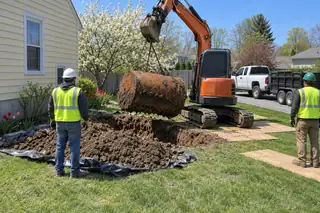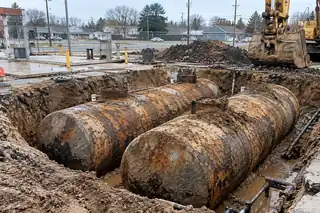
Emergency spill response begins when a release occurs and ends when regulators clear the site. Under CERCLA 1980 and 40 CFR 302, facility operators must notify the National Response Center at 1-800-424-8802 immediately when a reportable quantity is released. Penalties for late reporting reach $37,500 per day under Section 109 of CERCLA.
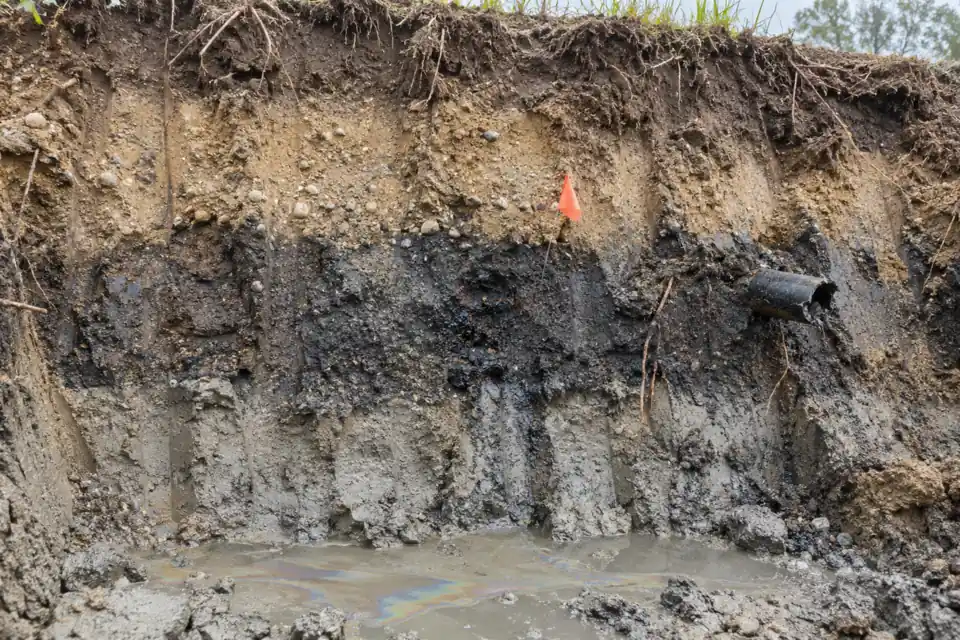
This guide covers the first hour of a spill, the reportable quantity rules, what a spill response contractor does on arrival, and what emergency cleanup typically costs.
Most operators learn this material under pressure. Reading it before an incident costs nothing. Reading it during one costs hours that you do not have. Keep this guide and your local response contractor's number in the same place as your spill kit. Mid incident calls to find the right contractor have cost operators six figures in waiting time alone.
The framework below applies to oil spills, fuel releases, and most hazardous substance discharges. Specialized materials such as radiological waste and certain pesticides have additional triggers under EPCRA 1986, but the core response sequence is the same. EPCRA Section 304 covers releases of the extremely hazardous substances listed in 40 CFR 355 and of CERCLA hazardous substances.

What Emergency Spill Response Actually Covers
Emergency spill response is the first phase of incident management, separate from long term remediation. It runs from the moment of discovery through stabilization of the site, removal of free product, and handoff to the assessment and cleanup teams. The phase typically lasts 6 to 72 hours depending on the release size and material. The Resource Conservation and Recovery Act, or RCRA 1976, then governs how the waste generated during response is profiled and disposed.
The work itself includes source control to stop additional release, deployment of booms or absorbent materials for spill containment, and notification to the National Response Center. The crew also handles vacuum truck extraction of free liquid and coordination with local fire and state environmental agencies. Local fire chiefs typically retain incident command authority until the scene is stabilized.
Hazardous spill cleanup at this stage is governed by 40 CFR 300, the National Contingency Plan. That regulation defines the federal environmental emergency response framework for releases of oil and hazardous substances and sets the structure your contractor follows when they coordinate with state and federal responders on scene. Most states adopt the NCP framework by reference, then add their own notification windows and contractor licensing rules on top.
What emergency spill response does not cover: soil excavation, groundwater monitoring well installation, or final site closure. Those tasks fall under the remediation phase. A spill response contractor stabilizes the situation, then hands off to a site assessment firm that handles the longer investigation. That investigation is usually a Phase II environmental site assessment performed to ASTM E1903 standards, not part of emergency response.
How to Report a Spill to the National Response Center
The National Response Center operates a single federal hotline at 1-800-424-8802. The line is staffed 24 hours a day by U.S. Coast Guard personnel. A release of a hazardous substance at or above its reportable quantity must be called in to that number under Section 103 of CERCLA, and oil discharges covered by 40 CFR 110 go to the same number. The NRC was established in 1974 and currently logs roughly 30,000 notifications per year.
When you call, the operator will ask for your name and callback number, the spill location, the material released, and the estimated quantity. They will also ask for the source of the release and any injuries or fire hazards on scene. The NRC issues a case number that follows the incident through federal records.
NRC reporting does not replace state reporting. Every state has its own spill notification line, and most require notification within a fixed window such as 2 hours or 24 hours after discovery. Texas requires reporting to the Texas Commission on Environmental Quality within 24 hours, while New Jersey requires notification to the DEP hotline within 15 minutes. California requires immediate reporting of any significant hazardous material release to the Cal OES State Warning Center and the local Unified Program Agency or 911.
Skipping either layer creates separate violations. The EPA can pursue federal penalties for missed NRC reporting while the state can pursue independent civil and criminal action. Operators in heavily regulated states face the steepest exposure when both lines are missed. Federal civil penalties are adjusted annually for inflation under the Federal Civil Penalties Inflation Adjustment Act, so the per day figure tends to rise over time.
Federal Reportable Quantity Thresholds Under CERCLA
Reportable quantities are defined in 40 CFR 302.4 for hazardous substances and in 40 CFR 110 for oil. The list includes more than 800 chemicals with thresholds ranging from 1 pound to 5,000 pounds. Common solvents such as benzene trigger NRC reporting at 10 pounds, while diesel and gasoline fall under the oil rule. MTBE, an oxygenate phased out of gasoline in most states, retains a 1,000 pound RQ that occasionally surprises operators handling older fuel inventories.
The oil reportable quantity is not measured in gallons alone. Any oil discharge to navigable waters that produces a visible sheen, a sludge or emulsion beneath the surface, or that violates an applicable water quality standard triggers reporting. That standard sits under Section 311 of the Clean Water Act and is codified at 40 CFR 110.3. Offshore releases follow a parallel rule under 33 CFR 153 administered by the Coast Guard rather than the EPA.
On land, the federal trigger differs. At UST facilities, a petroleum spill or overfill over 25 gallons, or one causing a sheen on nearby surface water, must be reported to the implementing agency, usually the state, within 24 hours under 40 CFR 280.53. EPCRA 1986 adds a separate notification requirement at 42 U.S.C. section 11004 for releases of extremely hazardous substances or CERCLA hazardous substances at or above their reportable quantities.
If you are unsure whether a release meets a reportable quantity, the operating rule is simple: call. NRC reporting carries no penalty for over reporting. Late or skipped notification carries penalties up to $37,500 per day per violation under Section 109 of CERCLA and parallel state law. When in doubt, document the release size, the time of discovery, and the actions taken before calling, then describe each clearly when the operator picks up.
What a 24 Hour Spill Response Contractor Does On Site
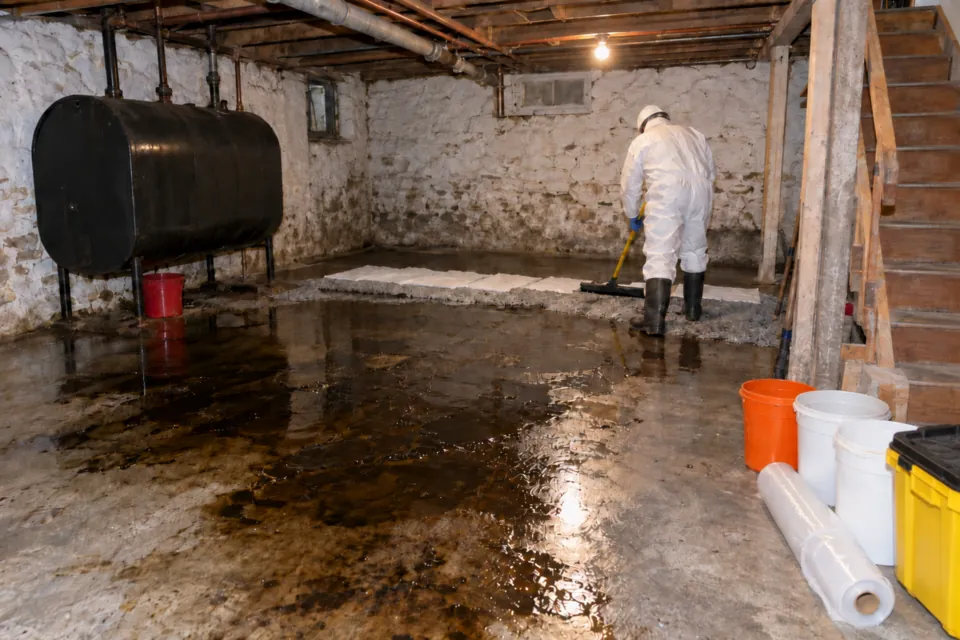
A 24 hour spill response contractor mobilizes a vacuum truck, response trailer, and trained crew to your site within a defined window from the call. Urban response is typically 1 to 2 hours; rural sites can wait 4 to 8 hours depending on travel distance and crew availability. The first job on arrival is source control. Most environmental emergency response contractors maintain at least one truck on standby through a dispatch service, with a second call backup from a partner firm if the first crew is already deployed.
Source control means stopping the release. For a ruptured tank or pipeline, that may involve isolating valves, deploying patch kits, or transferring remaining product to a tanker. For a vehicle accident, it usually means rolling absorbents under the leak and starting vacuum extraction of pooled fuel. A typical response trailer carries 5 to 10 absorbent boom sections, 200 to 500 pounds of granular absorbent, two patch kits sized for common UST and ASTM threading, and Level B personal protective equipment for the crew.
Once the source is controlled, the crew deploys spill containment to keep the release from spreading. On water, that means booms and skimmers. On pavement, it means absorbent socks, pads, and storm drain covers. On soil, the crew typically excavates a buffer around the release to capture mobile product before remediation begins.
Throughout the response, the contractor produces incident documentation: photographs, drum manifests, waste profiles, NRC case numbers, and a written incident report. That documentation becomes the foundation for any state file, insurance claim, or downstream tank inspection and testing work that the property may need. Waste manifests under 40 CFR 262 must accompany every drum and stay with the receiving facility for at least three years.
Typical Costs for Emergency Cleanup
Emergency cleanup is priced on a time and materials basis, not a flat rate. Typical mobilization fees for emergency spill response run $500 to $3,000 depending on contractor distance and equipment required. Crew rates run $125 to $250 per hour per technician during business hours and 1.5 to 2 times that for nights, weekends, and holidays. Regional variance is wide: a Northeast urban response can run 30 percent above a Gulf Coast quote because labor and disposal markets differ.
A small fuel release of under 25 gallons from a delivery truck or saddle tank typically costs $2,500 to $8,000 for full response, containment, and waste disposal. A larger release of 100 to 500 gallons from a ruptured tank can run $15,000 to $75,000 once vacuum extraction, contaminated soil staging, and manifested disposal are included.
Major releases above 500 gallons or those reaching surface water can exceed $250,000 within the first week. Costs scale with the volume of contaminated media that has to be characterized and disposed under RCRA 1976 manifest rules. Hazardous waste disposal alone can run $1.50 to $5.00 per pound depending on the waste profile. Petroleum contaminated soil that meets a state cleanup standard for thermal desorption can run as low as $75 per ton, while hazardous waste classified soil destined for a Subtitle C landfill can exceed $400 per ton.
Insurance recovery for emergency cleanup is possible but slow. Most pollution liability policies cover emergency response costs but require notification to the carrier within a defined window, often 30 days. Operators who want a current benchmark for related work should review the 2026 UST removal cost guide before any spill or planned closure. Specialty environmental impairment liability policies from carriers like AIG, Chubb, and Beazley typically carry $1 million to $10 million per occurrence limits with separate sub limits for emergency response.
Retainer Agreements Versus Cold Calling
Operators have two ways to engage emergency response: a pre negotiated retainer with a known spill response contractor, or a cold call to whoever answers fastest after an incident. Both work. They have very different cost and response time profiles.
Retainer agreements typically run $2,500 to $10,000 per year for a guaranteed response window, a posted callout rate, and a named project manager who knows your site. The annual fee buys faster response, predictable pricing, and a contractor who has already toured the facility and knows the access routes, drainage patterns, and contents of the spill kit. The better retainers also include an annual site walk, an updated written emergency spill response plan tailored to the facility, and a tabletop exercise for site personnel.
Cold calling during an incident usually produces response within 2 to 8 hours but at premium rates. Some contractors decline calls from new accounts on nights and weekends because the credit risk is high. Others quote inflated callout fees of $5,000 or more for first time customers because they expect to wait 60 to 90 days for payment. Quality also varies: a cold call response can produce an unlicensed sub or a single technician with no backup, while the retainer crew arrives credentialed and prepared.
Facilities subject to 40 CFR 112, the SPCC rule, must name their response resources in writing in the SPCC plan. That requirement pushes many facilities toward response agreements and detailed containment planning at any site with more than 1,320 gallons of aboveground oil storage capacity, or more than 42,000 gallons completely buried outside the federal UST rules. Use the find a UST contractor directory to identify response contractors in your area before the SPCC plan is updated.
Your Next Step: An Emergency Spill Response Plan Before You Need One
The cheapest emergency spill response is the one you planned for in advance. Three documents do most of the work: a current SPCC plan, a written contractor retainer agreement, and a posted call list with the NRC number, your state spill hotline, and your contractor's after hours dispatch. The plan should reference the SPCC rule's required elements under 40 CFR 112.7 and list the closest hazardous waste disposal facility with current acceptance criteria.
Site personnel need OSHA HAZWOPER training to handle a release safely. The 29 CFR 1910.120 standard requires 8 to 40 hours of training depending on the role. First responders at the operations level need at least 8 hours, and technicians who plug leaks and stop releases need at least 24 hours, plus annual refresher training under 29 CFR 1910.120(q).
Equipment matters less than people, but a basic spill kit at every loading area is required practice. The kit should match the worst credible release at that location: absorbent socks for small drips, drum overpacks for ruptured containers, and storm drain covers for any location near a catch basin or surface water body. Kits need a quarterly inventory check because absorbent socks degrade in humidity and patch kit gaskets harden after about two years of storage.
When the plan is in place, request a written quote from a licensed UST contractor covering both emergency response and any planned oil tank removal work you anticipate. Operators planning a tank closure should also review the 2026 compliance deadlines guide so the plan stays current. Submit a request a quote form to compare retainer pricing across regional response firms.