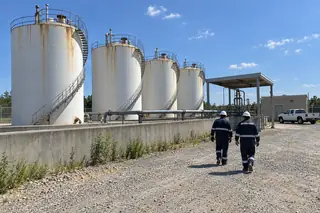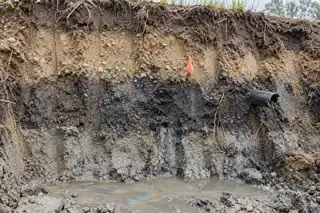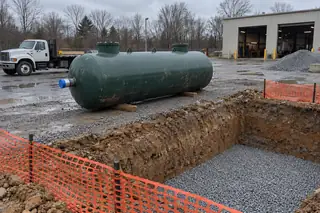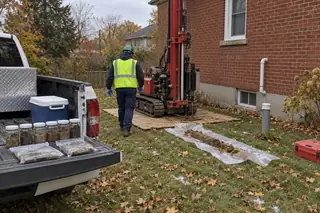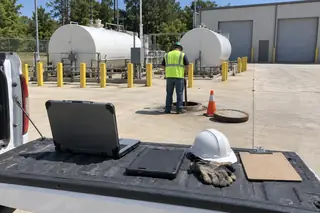
Catch basin cleaning is a stormwater compliance duty set by NPDES permits and local rules. Each stormwater permit or local ordinance sets its own cleaning schedule, often by time interval, sump fill depth, or both. Skipping the work triggers civil penalties up to $59,017 per day under current EPA Clean Water Act enforcement guidance, plus follow on liability when sediment plumes wash off the property and reach receiving waters.
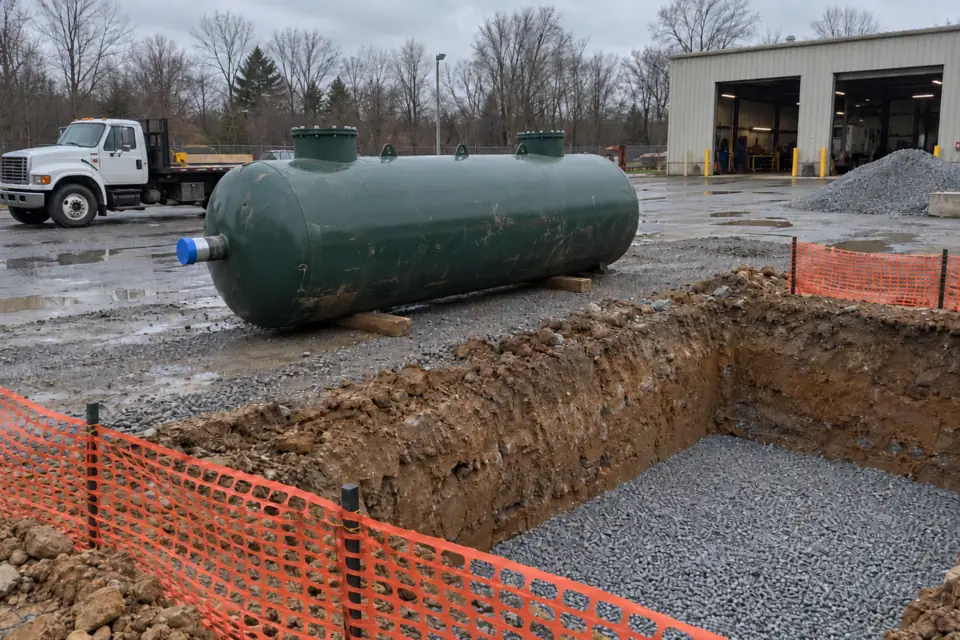
For property managers and industrial site operators, this work sits at the intersection of stormwater compliance, illicit discharge prevention, and good neighbor practice with downstream landowners and municipalities.
This guide covers cleaning frequency, vactor versus manual cleanout methods, sediment disposal under RCRA, regional cost ranges, inspection documentation standards, and how catch basin work integrates with the broader SPCC and SWPPP programs that already govern your site.
The audience is property managers, commercial site owners, municipal facility supervisors, and SPCC or SWPPP compliance officers who carry responsibility for stormwater infrastructure on industrial and commercial parcels nationwide.

Why Catch Basin Cleaning Is a Compliance Requirement
Stormwater catch basins capture runoff from parking lots, loading docks, and roof drainage before discharging into the municipal storm sewer system. The Clean Water Act of 1972 prohibits unpermitted discharge of pollutants to waters of the United States, and the EPA NPDES program implements that prohibition through MS4 permits issued to more than 7,000 municipal operators nationwide. The structural unit itself sits below grade with a grated inlet at the surface, a sediment sump below the outlet pipe invert, and an outlet pipe that connects to either a storm sewer main or a stormwater detention basin.
When a catch basin clogs with sediment, the captured pollutants get resuspended during the next storm event and washed downstream into receiving waters. Phosphorus, hydrocarbons, heavy metals, and trash that should have stayed in the sump end up in creeks, rivers, and bays.
Federal stormwater rules at 40 CFR 122.26 require regulated MS4s to develop a stormwater management program that addresses the operation and maintenance of structural controls. The federal rules do not name catch basins as a required control, so cleaning terms come from each MS4 permit, such as the good housekeeping measure for small systems at 40 CFR 122.34.
For private property owners, the obligation often flows downstream from the city. Industrial sites operating under a multi sector general permit have their own structural BMP maintenance duties, and commercial sites can be liable under local stormwater ordinances if their basins discharge sediment plumes off the property. Tenant occupied properties add another wrinkle, since the landlord and tenant often share or disagree about maintenance responsibility under the lease. Triple net commercial leases typically push stormwater infrastructure upkeep to the tenant, while gross leases leave the responsibility with the landlord, and the contract language controls liability when the next inspection finds a clogged basin or a sediment plume offsite.
How Often You Need to Clean Catch Basins
Catch basin cleaning frequency depends on site type, sediment load, and permit terms, but many programs pair a set service interval with additional cleaning when the sump fills past a defined depth. EPA's industrial stormwater permit calls for cleaning when debris reaches two-thirds of the sump depth, and some EPA-issued MS4 permits aim to keep basins no more than half full.
For high traffic commercial and industrial sites, the practical cadence often runs semiannual or quarterly. Restaurant rear lots with floor drains, fueling stations, equipment yards, and concrete batch plants all generate enough solids to fill a sump in months rather than years.
Post storm checks are the other trigger for catch basin cleaning. After a major rainfall event, sites operating under an industrial stormwater permit must walk the property and look at every inlet. Crews then document any catch basin showing more than 6 inches of accumulated sediment or any floating debris in the sump.
Climate matters too. Coastal sites, where summer storms drop several inches of rain in an hour, often need more frequent service than inland Midwestern sites with steadier precipitation. Local permit conditions usually quantify the threshold in inches of sediment depth or percentage of sump volume.
Vactor Cleaning Versus Manual Cleanout
Two primary methods dominate the industry. Vactor cleaning, also called vacuum truck cleaning, uses a high pressure water jet to break up compacted sediment and a vacuum hose to lift the slurry into a tank on the truck. Manual cleanout uses a worker with a shovel, bucket, and tripod hoist to dig the sump out by hand.
Vactor service handles the majority of commercial and municipal work. A typical combination truck carries 1,500 gallons of water and a 12 cubic yard debris tank, lets a two person crew clean 20 to 40 basins in a day, and produces a far cleaner result than manual labor can. The tradeoff is mobilization cost and access requirements for a 30,000 pound truck.
Manual cleanout still has a place on sites where truck access is impossible. Rooftop basins, parking deck inlets, courtyards behind security gates, and confined spaces near building walls sometimes can only be reached on foot. Manual work also makes sense for small batches under five basins, where the vactor mobilization fee outweighs the per basin labor difference.
Hydroexcavation contractors offer a hybrid approach that combines vactor capability with confined space entry training. For deep sumps over 8 feet, basins with grade level grates wider than 36 inches, or any work that requires entry, a contractor with current OSHA confined space documentation is the right call.
Catch Basin Sediment Disposal and Hazardous Waste Rules
Sediment removed from a catch basin is the part of the job most operators underestimate. The material is regulated as solid waste under RCRA Subtitle D at minimum, and can be reclassified as hazardous waste under RCRA Subtitle C at 40 CFR 261 if testing shows elevated contaminant levels from a specific industrial process. EPA characterization studies show that catch basin solids at industrial sites trigger hazardous waste designation roughly 15 to 25 percent of the time, depending on the source category and the contaminant of concern.
For most parking lot and street basins, the sediment qualifies as nonhazardous and goes to a permitted landfill. Many vactor contractors operate dewatering facilities where the slurry is separated into solid residuals and decanted water, with the water either discharged under an industrial wastewater permit or recycled into the next cleaning run.
Fueling station basins, industrial yard basins, and any site with documented historical contamination need testing before disposal. The typical screen includes TCLP analysis for the eight RCRA metals, plus benzene and lead at sites with petroleum exposure. California regulates catch basin solids as designated waste under Title 22 if metals exceed soluble threshold limits, and Washington runs its own dangerous waste characterization. A failing TCLP result triggers hazardous waste manifesting and shipment to a Subtitle C facility, which can add $400 to $1,200 per ton to disposal cost.
Sites with petroleum impact often need a full Phase 2 site assessment to characterize the soil and groundwater before stormwater work begins.
Cost Ranges for Catch Basin Cleaning Services
Pricing varies by region, basin depth, and disposal pathway, but the typical range for routine vactor cleaning runs $150 to $400 per basin on a multi basin route. Single basin emergency calls or remote sites often bill at $500 to $900 per visit because mobilization cost dominates the line item.
Annual catch basin cleaning contracts for commercial properties with 10 to 50 basins generally price out at $1,800 to $8,000 per year, depending on basin count, scheduled frequency, and whether sediment testing is bundled. Municipal contracts for several thousand basins per route can drop the unit cost to $90 to $150 per basin because of route efficiency.
Hazardous waste disposal adds the biggest variable. A clean nonhazardous load disposed at a Subtitle D landfill might cost $35 to $80 per ton in tipping fees. A TCLP failure that routes the same load to a Subtitle C facility can push tipping fees to $300 to $700 per ton, plus manifesting fees and dedicated transportation surcharges. RCRA generator identification, manifest preparation under 40 CFR 262, and dedicated tractor trailer transport from the site to the nearest Subtitle C facility can add another $1,500 to $4,500 per load on top of tipping fees. That figure climbs further when the closest permitted facility sits several states away from the project.
Get a written quote that breaks out mobilization, per basin cleaning, sediment testing if required, disposal tipping fees, and any video inspection or documentation deliverables. Bundle pricing without an itemized scope makes it easy for the disposal line to balloon at invoicing time. You can request a quote for site specific scope or browse the contractor directory to compare local providers.
Inspection Standards and Documentation Requirements
Inspection is the paper half of stormwater compliance. Most MS4 and industrial permits require a written record of every catch basin inspection that captures date, basin location, sediment depth, structural condition of the casting and frame, and any corrective action taken. Many permits also require photo documentation of each visit.
A standard inspection covers four points. Check sediment depth with a calibrated probe rod and record the measurement in inches. Look at the casting and frame for cracks, displacement, or missing covers. Examine the outlet pipe for blockage, root intrusion, or hydrocarbon sheen, then verify the basin walls and trap for structural damage. A smartphone camera serves to capture photos that match each text entry to a specific basin and date.
Annual reports tie everything together. Industrial sites operating under multi sector general permits file an annual report that summarizes inspection findings, BMP performance, and corrective actions across all stormwater controls. Municipal MS4 operators file similar reports with their state permitting authority, often by March of each year for the preceding calendar year.
Tie catch basin records into your overall stormwater paperwork. The Stormwater Pollution Prevention Plan, covered in detail in the SWPPP guide, needs current inspection logs, maintenance receipts, and disposal manifests filed in one accessible location. Inspectors from your state environmental agency expect to see the binder during routine audits.
Your Next Steps for Stormwater Compliance
The path forward depends on whether the program is new or already running. New facilities should begin with a site walk to inventory every catch basin, manhole, and stormwater inlet, then map the conveyance network so you know what discharges where. Existing programs should pull the last three years of inspection logs and audit them against current permit terms.
Pair catch basin cleaning with the rest of your stormwater portfolio. Spill containment kits at fueling areas, secondary containment for chemical storage, oil and water separators on industrial sewers, and stencil markings at every inlet all work together as a layered defense. The spill containment guide covers the field equipment side in detail.
For sites with petroleum storage on the property, the SPCC plan is the other critical document. The SPCC plan guide explains how facilities with more than 1,320 gallons of aboveground oil storage must develop and certify a Spill Prevention, Control, and Countermeasure plan under 40 CFR 112. Catch basin maintenance often appears as a discharge prevention measure inside the SPCC itself.
Vet contractors carefully. Ask about vactor truck count and age, confined space credentials, hazardous waste manifest experience, and how the firm handles decanted water disposal. Contractors that perform tank decommissioning or oil tank removal often carry the petroleum and hazardous waste training that lighter duty stormwater crews lack. Ask for three recent client references in commercial property management and request manifest copies from a recent disposal job to verify the paperwork trail you will inherit.