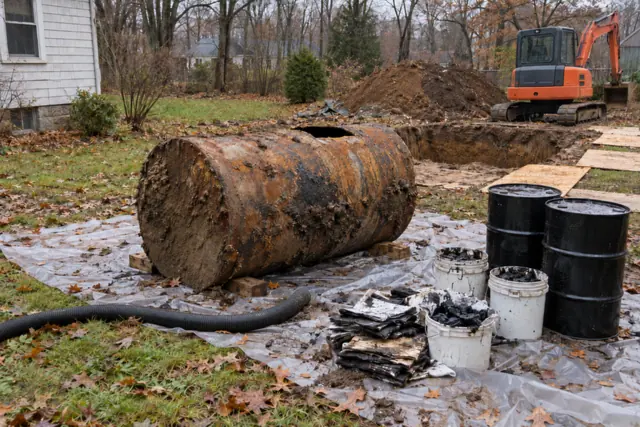
Tank Decommissioning Contractors in North Carolina

Find contractors in North Carolina for tank decommissioning, UST closure, closure in place, and soil testing. Serving Charlotte, Raleigh, Greensboro, Winston-Salem, and communities statewide.

Browse North Carolina Contractors →

What to Know About Tank Decommissioning in North Carolina

Tank decommissioning in North Carolina demands state-approved closure, not informal abandonment. The North Carolina DEQ UST Section enforces closure under 15A NCAC Subchapter 02N, which sets notification, sampling, and reporting steps for every permanent closure. Owners must notify the agency before work begins and submit a closure report documenting tank condition and soil results. Commercial fueling sites, fleet depots, and former gas stations from the Piedmont to the Outer Banks make up most closure work, since residential heating oil tanks are rare here. Many buyers order a Phase I ESA before purchase to flag a buried tank that will need closure.

Demand concentrates in the Research Triangle, where Raleigh, Durham, and Chapel Hill redevelopment keeps uncovering old fuel systems beneath commercial lots. Charlotte's banking-district construction boom drives a steady stream of UST removal projects as parking lots and former service stations give way to high-rises. Across the Piedmont, Greensboro and Winston-Salem carry aging tank inventories tied to textile-era industrial sites and truck-stop corridors along I-40 and I-85. Asheville and the Blue Ridge foothills add a tourism-driven mix of small fueling operations and converted properties. Coastal counties near the Outer Banks face high water tables that complicate closure in place and push more owners toward full removal. The state stands apart for its split between fast-growing metro redevelopment and a long tail of rural single-wall tanks that have sat idle past the federal twelve-month limit.

Closure in place in North Carolina typically runs $1,200 to $3,500, while a full UST removal with decommissioning report ranges from $3,000 to $8,000 for a standard commercial tank. Soil sampling adds $400 to $1,200 per location, and confirmed contamination can push total cleanup past $10,000 to $60,000 depending on plume size and groundwater impact. Tank size, site access, and disposal of any contaminated soil drive most of the variation. North Carolina operates one reimbursement program through the NCDEQ trust funds: the Commercial Leaking UST Cleanup Fund, authorized under N.C.G.S. 143-215.94B, which may reimburse eligible cleanup costs above a per-occurrence deductible. The non-commercial fund that once covered homeowner tanks was phased out by Session Law 2015-241 Section 14.16A. Eligibility runs from the discharge discovery date, so owners who delay a closure report can lose access to fund dollars they would otherwise recover.

The typical North Carolina closure follows a clear sequence: pre-closure notice to NCDEQ, tank emptying and cleaning, excavation or inert filling, soil and groundwater sampling, and a final decommissioning report submitted for review. Permanent closure of a commercial tank usually takes three to seven field days, but state review of the closure documentation and any No Further Action signoff can stretch several months. Contractors handling petroleum-contaminated soil must hold current HAZWOPER training for their crews, a baseline safety credential the agency expects on any cleanup site. Before hiring, North Carolina property owners should ask a contractor to confirm recent closure work in their county, show proof of trust-fund claim experience, and itemize whether soil testing and the closure report are included in the bid. Get that scope in writing before any tank comes out of the ground.

Tank Decommissioning Contractors in North Carolina

Browse contractors, see contact details, and request free quotes.

Browse North Carolina Contractors →

Frequently Asked Questions

Do you need a license to decommission a tank in North Carolina?

North Carolina does not issue a single statewide tank decommissioning license, but the work is tightly controlled by NCDEQ. The contractor must follow the closure procedures in 15A NCAC Subchapter 02N and submit reports the agency will accept. Crews handling contaminated soil need current HAZWOPER safety certification, and soil assessment work is usually performed by a licensed geologist or professional engineer. Most owners hire an environmental firm that carries those credentials in-house. Ask any contractor to confirm who on the team holds the qualifications before signing.

How much does tank decommissioning cost in North Carolina?

A closure in place in North Carolina usually costs $1,200 to $3,500, while removing a commercial tank runs $3,000 to $8,000. Soil sampling adds $400 to $1,200 per location, and that test result often decides the final bill. If contamination turns up, remediation can climb from $10,000 to well over $60,000 depending on how far the plume has spread. Tank size, depth, and site access in tight urban lots like downtown Charlotte also move the price. Get a written scope that separates the closure cost from possible cleanup costs.

How long does UST closure take in North Carolina?

Field work for a permanent closure typically takes three to seven days for a commercial tank. Soil and groundwater sample results come back in one to three weeks after the tank is pulled. NCDEQ review of the closure documentation can take several weeks to a few months, and a No Further Action letter on a clean site may run longer. Coastal sites near the Outer Banks with high water tables sometimes need extra dewatering, which adds days. Plan for the paperwork timeline, not just the excavation, when scheduling around a property sale.

Can North Carolina's trust funds help pay for tank closure?

North Carolina runs one petroleum cleanup program that can offset closure and remediation costs. The commercial UST Trust Fund covers eligible commercial sites, administered by NCDEQ under N.C.G.S. 143-215.94B. The non-commercial fund that once handled homeowner tanks was phased out by Session Law 2015-241 Section 14.16A, so a typical single-family heating oil tank has no state fund coverage. Reimbursement applies above a per-occurrence deductible and only to costs the agency deems eligible, so documentation matters. Eligibility runs from the discharge discovery date, meaning delay can cost you access to fund dollars. Contractors familiar with these funds often handle the claim paperwork as part of the job.

What happens during a tank closure in North Carolina?

A North Carolina closure starts with written notice to NCDEQ before any work begins. The contractor empties and cleans the tank, then either removes it or fills it with an inert material for closure in place. Soil samples are pulled from the pit bottom and sidewalls, and groundwater is tested where the water table is shallow. Those results go into a closure report that the state reviews before issuing closure. Expect the field work to move quickly while the agency review and any sign-off take the most time.

Looking for a contractor in North Carolina?

Browse contractors, see contact details, and request free quotes.

Browse North Carolina Contractors →

For North Carolina UST regulations, visit the North Carolina DEQ UST Program. Federal requirements are available from the EPA UST Program.

Related Services in North Carolina

Find North Carolina ContractorsRequest a Free Quote
Free Quotes