A Phase 1 ESA report's findings section tells you whether to keep investigating. It sorts what the consultant saw into labels. A REC, which includes the controlled REC, is the label that usually leads to a Phase 2; a significant data gap or a vapor encroachment condition can too, and the rest mostly call for paperwork.
A Phase 1 environmental report is the environmental professional's signed opinion on whether anything hazardous, petroleum included, has been released or threatens to be released on the property. No soil or groundwater testing goes into a standard Phase 1; the work is records, interviews and a walk-through, described in what a Phase 1 environmental site assessment involves.
Most readers open the PDF because a closing date is coming. CERCLA's landowner liability protections start with all appropriate inquiries (AAI) before acquisition, and 40 CFR 312.20 sets the clock: one year for the inquiry, 180 days for its key components. A finding that surfaces late can push that date or reopen the price.
The deal-side steps sit in the environmental due diligence guide; what follows decodes the findings one label at a time.
What does the findings section of a Phase 1 ESA report tell you?
The findings section states what the environmental professional concluded and how far that conclusion can be trusted. Under 40 CFR 312.21(c), the report must give the professional's opinion on whether the inquiry identified conditions indicative of releases or threatened releases. It must also name the data gaps that affect that opinion and comment on their significance.
Two signed declarations and the professional's qualifications round out the required contents. 40 CFR 312.10 defines who may sign as an environmental professional, and most routes pair a credential or degree with years of relevant experience. A PE or PG license plus 3 years qualifies, as does a state or federal license to do environmental inquiries plus 3 years, a science or engineering degree plus 5 years, or 10 years of relevant experience alone.
An environmental site assessment checklist for the findings pages needs four checks. First, find every condition the consultant labeled and the page holding its supporting record. Second, read the professional's opinion on further investigation. Third, read the comment on each data gap's significance. Fourth, compare the date of every component against your closing date.
Read the conclusions of the environmental site assessment report before the appendices. The labels there tell you which database pages and historical maps deserve a second look. A database listing for a nearby property is background until the consultant attaches a label to it, so a thick appendix of hits says little on its own.
| Finding | What it means | Usual next step | Who handles it |
|---|---|---|---|
| REC | Evidence of a release, a likely release, or a material threat of a future release of hazardous substances or petroleum products at the property | Read the professional's opinion on further investigation, then decide on a Phase 2 | Phase 2 consultant; a tank contractor as well when the REC is a tank |
| CREC | A release that received regulatory closure and stays subject to required controls; a CREC is still a REC | Get the closure letter and every control document, and check that the planned use fits them | Environmental consultant, with the buyer's attorney for deed restrictions |
| HREC | A past release that was remediated, received regulatory closure and is not subject to any controls | Keep the closure file with the deal records and check that the report's HREC call is backed by documentation | Environmental consultant only if the closure file is incomplete |
| De minimis condition | A minor release-related condition the standard excludes from the REC definition | Note it; no investigation is expected | No one |
| Data gap | Information the rule requires that could not be obtained despite good faith efforts | Read the comment on its significance; a significant gap over a likely release area can justify sampling | Environmental consultant |
| Vapor encroachment condition | The presence or likely presence of chemical vapors in the soil beneath the property, found by an optional ASTM E2600-22 screen | Vapor assessment, then mitigation if needed | Vapor intrusion consultant or mitigation contractor |
| Environmental lien | A recorded cleanup lien against the property; the search is required by 40 CFR 312.25 | Confirm the search was done and who ran it | The buyer, unless the consultant was hired to run the search |
What is a recognized environmental condition?
A recognized environmental condition (REC) means hazardous substances or petroleum products are present at the property because of a release, are likely present because of a release or likely release, or sit there under conditions that threaten a future release. ASTM E1527-21 section 1.1.1 defines it in three numbered parts, and the wording of each part matters.
Part one is "the presence of hazardous substances or petroleum products in, on, or at the subject property due to a release to the environment," which covers a release that has already happened. The second swaps presence for "likely presence" and widens the cause to "a release or likely release," which is where most of the consultant's judgment goes. A third part covers products present "under conditions that pose a material threat of a future release to the environment," such as a corroded tank still holding product. De minimis conditions are carved out of the definition by name.
The middle part does the heavy lifting. A REC records a professional judgment, and no lab result stands behind it at this stage; a historical map showing a fuel station on the parcel, or a fill pipe with no closure record, can be enough. An underground storage tank with no closure paperwork is the textbook case, and what to do when a Phase 1 ESA finds an underground storage tank walks through that finding. Contamination that started next door counts once it is "at the subject property," so a neighboring station with a leak history can produce that finding on the parcel being bought.
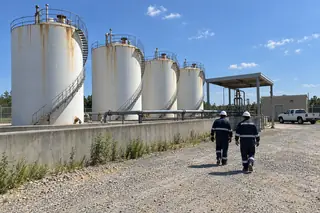
Petroleum belongs in the definition on purpose. Section 1.1.2 keeps petroleum products within the standard's scope for commercial real estate, so a leaking fuel or heating oil tank can carry a REC the same way a solvent release can. A buyer of a former service station should expect the tank field and the old service bays to be read against all three parts.
REC vs CREC vs HREC: what is the difference?
The difference is whether a release is still an open question or was closed by a regulator, and whether that closure left controls behind. A REC is the open question. A controlled recognized environmental condition, or CREC, is a release that received regulatory closure and remains subject to required controls. HUD's Phase I training slides define the third label, a historical recognized environmental condition or HREC, as a past release "that was remediated, received regulatory closure, and is not subject to any controls."
A CREC is still a REC. HUD's Phase I memo puts it in a parenthesis: "CRECs (which are RECs) will often be conditioned upon continued enforcement of institutional and engineering controls on the site," so the closure holds only while the controls hold. Whoever buys the site is buying that obligation along with the land. If a purchase contract uses the ASTM definition, a right to walk away on any REC likely reaches a CREC too, which is a question for the buyer's attorney. Reports sometimes bury the label in prose, so search the PDF for each acronym and read the full sentence around every hit before anyone calls a finding harmless.
Institutional controls are the paper half of that pair, and they often take the form of an environmental covenant recorded with the deed, or a local ban on drinking the groundwater. Engineering controls are the physical half, such as a pavement cap over impacted soil or a vapor barrier under a slab. 40 CFR 312.10 defines institutional controls as "non-engineered instruments, such as administrative and/or legal controls, that help to minimize the potential for human exposure to contamination and/or protect the integrity of a remedy."
Each label sends a buyer somewhere different. A REC raises the Phase 2 question discussed below. For a CREC the work is mostly paper: get the closure letter and every control document, then confirm the planned use fits inside them, since a site restricted to commercial use cannot quietly become a daycare. An HREC asks the least, though its closure file belongs in the deal records because a future buyer or lender may ask for it. Where the old release was a fuel leak, that file also shows what environmental remediation was done and what was left in place.
What are de minimis conditions and data gaps?
De minimis conditions are minor release-related findings that generally would not threaten health or the environment, so they stay outside the REC definition, and data gaps are holes in the information the consultant could not fill. Light staining on pavement where vehicles park is a common de minimis example. The first category is recorded and closed. A data gap stays open until someone decides whether it matters. Both appear in the findings so the reader can see what was weighed and set aside.
40 CFR 312.10 defines a data gap as "a lack of or inability to obtain information required by the standards and practices" of the rule, even after good faith efforts. Common causes include a locked building, a former owner nobody could reach, missing years in the historical record, or an unanswered records request. A gap is a fact about the inquiry, and only sampling can say what the soil holds.
Significance is the part to read twice. 40 CFR 312.21(c) requires the report to comment on how significant each listed data gap is to the professional's opinion. A missing decade of city directories for a house lot is usually minor. No access to the building that once held the vehicle service bays is a hole exactly where a release would be.
A significant data gap over a former fueling area deserves the same Phase 2 conversation as a REC.
How long is a Phase 1 ESA report good for?
A Phase 1 ESA report supports a purchase for one year, as long as five of its components were done or updated in the 180 days before closing. According to 40 CFR 312.20, AAI "must be conducted within one year prior to the date of acquisition," and that is the outer limit. Five components carry a tighter rule: they "must be conducted or updated within 180 days of and prior to the date of acquisition."
The five are interviews with past and present owners, operators and occupants; searches for recorded environmental cleanup liens; reviews of federal, tribal, state and local government records; visual inspections of the facility and adjoining properties; and the environmental professional's declaration. Everything else, including the historical source review, falls under the one-year limit alone.
ASTM E1527-21 section 4.6 treats an assessment as "presumed to be viable when it is conducted within 180 days prior to the date of acquisition," the same window the federal rule uses. It also warns that "the date of the report generally does not represent the date the individual components of all appropriate inquiries were completed," so the dates that matter are inside the report. Measure the interview, site visit, lien search, records review and declaration dates against the closing date.
Reports written to the old standard carry a second expiry. 40 CFR 312.11 let ASTM E1527-13 satisfy AAI only until February 13, 2024, so E1527-13 is no longer a recognized way to show AAI, and any report finished before that date is past the one-year limit anyway. If the work is more than 180 days but less than a year old, updating those five components brings it current. Past one year, expect a new assessment; the Phase 1 environmental site assessment cost page breaks pricing out by state.
What is vapor encroachment screening, and where do lien searches fit?
Vapor encroachment screening is an optional check, run under ASTM E2600-22, for chemical vapors reaching the soil beneath a property from contamination on or near it. The standard calls a hit a vapor encroachment condition, meaning "the presence or likely presence of COC vapors in the vadose zone" of the property, where COC means chemicals of concern. The lien search covered below is the opposite case, a required part of AAI.
Screening runs in two tiers, and either Tier 1 or Tier 2 can find the condition. E2600 says it "is not a requirement of" AAI and does not define it, so a Phase 1 can satisfy AAI without the screen. Even without it, the consultant can still call a nearby vapor plume a REC. When a condition does turn up, vapor intrusion mitigation covers the building side.
Lien searches, by contrast, are mandatory. ASTM E1527-21 section 4.6.1 calls the search "a user responsibility," and when the user hires the environmental professional to run it, the report has to give the search date. The federal requirement sits in 40 CFR 312.25, which says AAI "must include a search for the existence of environmental cleanup liens against the subject property."
If the report says the lien search was left to the user, an environmental lien may still be unchecked, so ask the title company or the closing attorney for the search.
Does a REC mean you need a Phase 2?
A REC opens the Phase 2 question; it does not settle it. 40 CFR 312.31(b) says the professional's inquiry "should include an opinion regarding additional appropriate investigation, if any," so the report itself is the first place to look for a recommendation. The decision to sample belongs to the user of the report, usually the buyer. An opinion section that is silent on further investigation is worth a written question to the consultant before anyone decides.
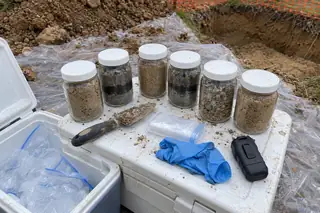
A Phase 2, run under ASTM E1903, samples soil and groundwater, and sometimes soil gas, to test whether the REC reflects real contamination; the Phase 2 environmental site assessment guide covers scope and timing. The tradeoff is plain. Sampling spends money and calendar time before closing and can push the date. Walking away costs the deal and whatever was spent reaching it, and renegotiating without data means pricing a risk nobody has measured.
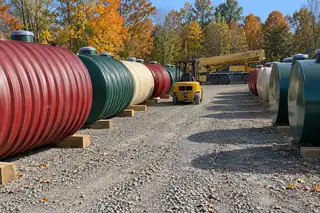
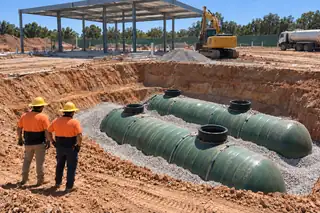
When the REC is an underground or aboveground tank, call a tank contractor alongside the Phase 2 consultant. The tank's removal or closure and the soil sampling beneath it can often be planned as one job, with the seller's sign-off and any closure notice the agency requires. Closure samples come from the same ground a Phase 2 would test, so coordinating the two can avoid digging there twice. Firms that remove and close tanks are listed by state in the UST contractor directory. Tank decommissioning vs removal explains which path fits a given tank, and the oil tank removal guide covers the dig itself.
Any REC that is not a tank comes down to a judgment between the consultant's opinion and the buyer's tolerance for unmeasured risk, made while the 180-day clock on the report's components keeps running.