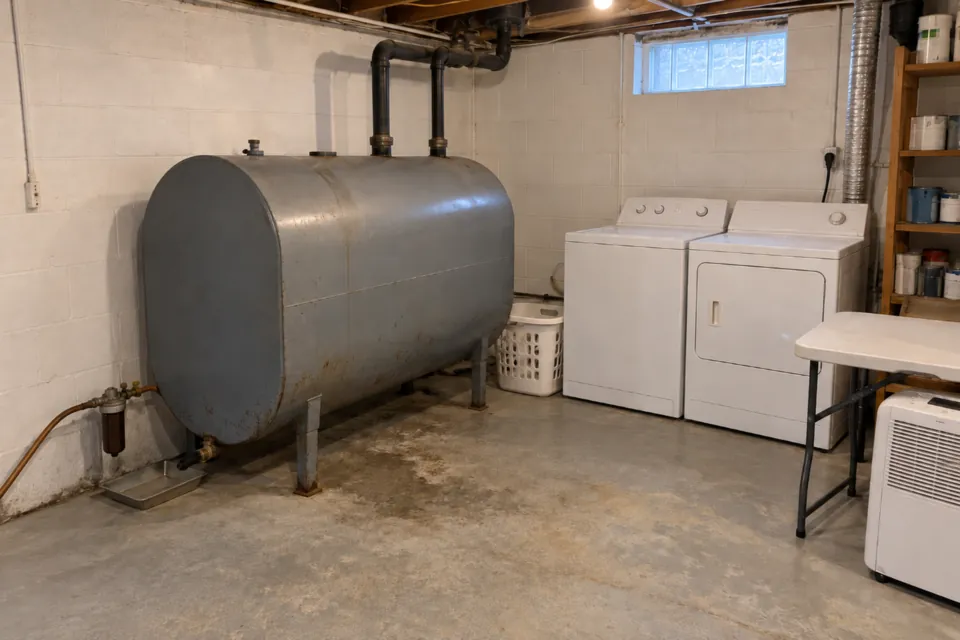
An above ground oil tank sits visible on a pad or basement floor. Most homeowners pay $2,000 to $5,500 to install a new aboveground unit in 2026, and many convert from buried service during that same project to compare lifetime costs. Federal UST rules at 40 CFR 280.12 do not cover heating oil tanks used on the premises, leaving NFPA 31 and state and local codes as the controlling requirements.
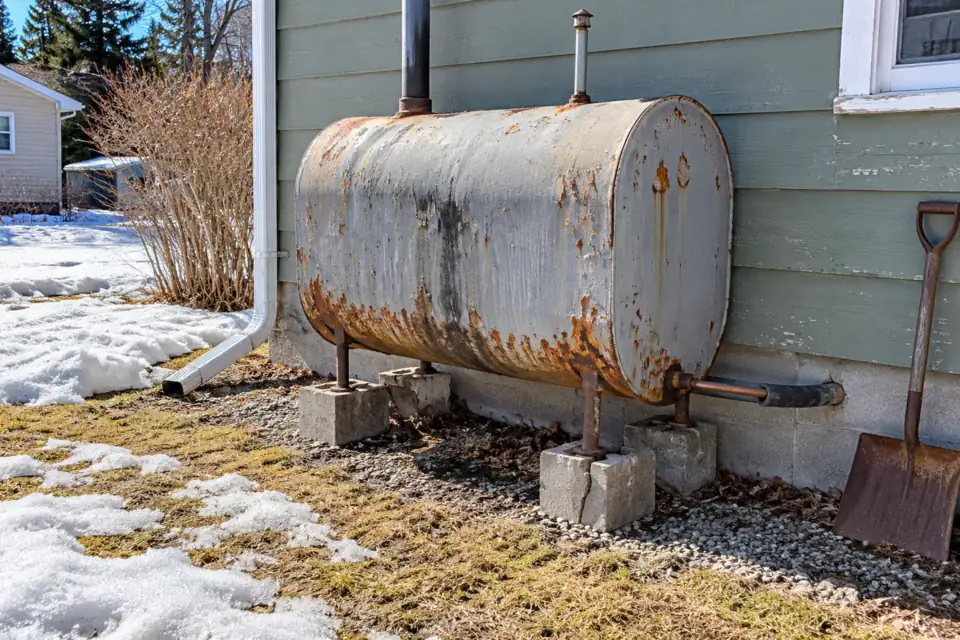
Many homeowners replacing a buried heating oil tank choose an aboveground unit, because a tank they can see is easier to inspect, insure and close. Insurance carriers, real estate buyers, and some state regulators all treat a buried tank as a bigger risk than one in the basement. Some owners skip the aboveground step entirely and price an oil to gas conversion instead, which still leaves the buried tank to be closed properly.
Choosing an aboveground unit creates a steady stream of conversion projects. Homeowners with a 30-year-old buried tank typically remove the old unit and install an above ground oil tank in the basement or on an outdoor concrete pad, often at the time of a property sale or insurance claim. The total project cost for a conversion runs $4,500 to $9,500, with the buried tank removal accounting for about half of that figure.
This guide explains what aboveground installation means in practice and when conversion from buried service makes sense. It covers indoor and outdoor placement, current pricing, the code and insurance requirements that govern the install, and how to hire a qualified contractor. See our oil tank replacement guide for brand-by-brand comparisons across Roth, Granby, and other manufacturers.
What an Above Ground Oil Tank Is and Why It Matters
An above ground oil tank is any heating oil storage unit installed entirely above the soil surface. The category covers indoor basement tanks resting on a concrete floor, outdoor units sitting on a poured pad next to the house, and elevated tanks installed on saddles or legs above grade. All three configurations sit outside the federal Underground Storage Tank program at 40 CFR 280, which by definition regulates only tanks with 10 percent or more of their volume below grade.
The classification matters because some states regulate buried heating oil tanks but not ones above ground. Maine, for example, registers underground oil tanks of any use or size, while 38 M.R.S. 562-A does not count a basement tank sitting on the floor, where it can be readily inspected, as an underground tank. For an aboveground tank, the rules come from NFPA 31 (the industry installation standard for oil-burning equipment), state heating oil regulations, local fire codes, and homeowner insurance policy terms.
Two specific advantages drive most conversions to above ground service. The first is visibility: a leaking aboveground tank shows itself within hours through staining, odor, or a dropped gauge reading, while a buried tank can leak slowly for years before any sign reaches the surface. The second is closure simplicity: replacing or decommissioning an aboveground unit takes one day and no soil sampling, while a buried tank closure typically requires excavation, lab testing, and a state-filed closure record.
Insurance reinforces the decision. Some insurers limit or exclude coverage for buried oil tanks, so switching to above ground can remove a coverage exclusion that would otherwise leave the homeowner exposed to the full cost of a contamination event. Ask your insurer what changes before you choose.
Switching From a Buried Tank to Above Ground
The case for switching from buried service to aboveground rests on three numbers. The first is age: most steel buried tanks fail between year 20 and year 35, and a tank past year 25 is operating on borrowed time. The second is corrosion risk: buried tanks corrode from the outside (soil contact) and the inside (moisture and sulfur compounds in fuel), and the combined rate accelerates after year 20. The third is contamination cost: a single buried tank failure typically generates $15,000 to $80,000 in cleanup expense.
Timing the switch carefully saves money. A homeowner who waits until the buried tank actually leaks pays for emergency response, soil sampling, contamination assessment, lab analysis, and remediation on top of the basic replacement cost. A homeowner who switches proactively at year 25 pays only for tank removal, soil sampling, a new aboveground unit, and installation labor. The proactive path runs $4,500 to $9,500 total, while the reactive path can climb past $50,000.
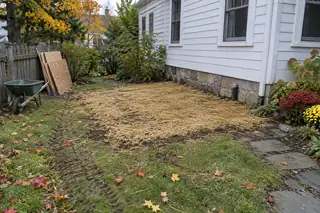
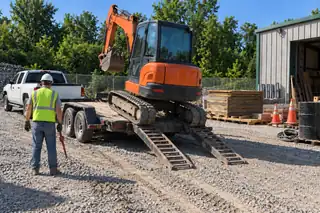
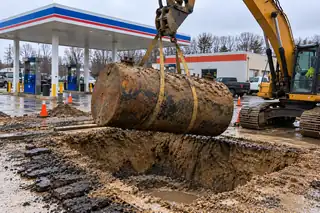
The conversion project follows a standard sequence. A licensed contractor pumps any remaining product from the buried tank, excavates the unit, and hauls it to a licensed scrap facility. The crew then collects soil samples from the tank pit per state requirements and backfills with clean material once lab results return clean. Final steps include pouring a concrete pad indoors or outdoors for the new aboveground unit and connecting it to the existing burner with new copper supply lines.
Documentation closes the project. The closure paperwork goes wherever your state or town requires, such as the local fire department or the state environmental agency. Soil sample results go into the property file, and the new aboveground unit gets registered if your state program covers it. Real estate transactions years later go far more smoothly when this paperwork exists than when it does not.
Indoor vs Outdoor Aboveground Tank Placement
Indoor placement dominates aboveground installations in the Northeast and Mid-Atlantic. A basement oil tank stays warmer than the outdoor air, which prevents the fuel viscosity problems that can clog a No. 2 fuel oil line at temperatures below 10 degrees Fahrenheit. Indoor units also escape weather exposure entirely, so paint coatings last longer and external corrosion is essentially zero.
The downside of indoor placement is footprint. A 275 gallon vertical tank consumes about 11 square feet of finished basement floor and 5 feet of vertical clearance. A horizontal model needs a 4 by 5 foot footprint. Older basements with low ceilings or finished living space often cannot accommodate a new install without sacrificing usable square footage, which pushes homeowners toward outdoor placement instead. Whichever orientation you choose, the heating oil usage calculator reads both 275 layouts' gauges correctly, including the nonlinear bottom quarter.
Outdoor placement works well when indoor space is constrained or when the original buried tank was outside. A code-compliant outdoor oil tank requires a concrete pad rated for the filled weight, which runs about 1,900 pounds on a 275 gallon size. The install also needs the clearances your local fire code sets, a frost-resistant supply line back to the burner, and adequate drainage to prevent pad heave during freeze-thaw cycles. Owners in flood zones must elevate or anchor against buoyancy.
Outdoor units last as long as indoor ones when maintained. The single largest maintenance task is repainting every five to seven years to prevent external corrosion, plus annual inspection of the supply line insulation. Properly installed outdoor units routinely reach 30 years of service, matching the typical indoor lifespan, and modern double-wall designs from Roth and Granby carry warranties that span that full period.
Above Ground Oil Tank Cost and Maintenance
Above ground oil tank cost in 2026 splits cleanly by job type. A simple indoor swap, with no buried tank involved, runs $2,000 to $5,500 depending on tank brand and size. A basement-to-outdoor conversion adds $800 to $1,500 for the concrete pad, the through-foundation supply line, and a frost-resistant fuel line. A full buried-to-aboveground conversion adds $2,500 to $4,500 for the removal of the existing buried unit and any required soil sampling.
Material costs make up about half the total. A 275 gallon double-wall above ground oil tank from Roth or Granby runs $1,400 to $2,200 at the supply house, while a single-wall equivalent from Bock or Granby Standard runs $700 to $1,100. Vent and fill piping, copper supply line, an oil filter, and standard fittings add another $300 to $500 to the materials bill. Permits and inspection fees run $100 to $400 depending on the jurisdiction.
Labor accounts for the rest. A standard basement-to-basement aboveground install takes six to ten hours of skilled work from a two-person crew. Hourly rates run $85 to $150 in most metro markets, putting labor at $1,000 to $2,200 for an indoor swap. Outdoor installations or conversions add four to eight hours for the pad work and additional piping, which translates to another $400 to $1,000 in labor.
Maintenance costs stay modest. An annual burner service, which the homeowner needs regardless of tank choice, runs $150 to $300. Repainting an outdoor aboveground unit every five to seven years runs $150 to $400 if a contractor handles the prep and finish coats, or under $50 in materials if the homeowner does the work. Tank gauge replacement, fuel filter replacement, and supply line insulation each run $30 to $100 if a problem develops. See our oil tank removal cost guide for the closure side of the lifetime cost picture.
Code and Insurance Requirements for Aboveground Installation
NFPA 31 is the national installation standard for oil-burning equipment and its tanks, and state and local codes decide how it applies where you live. A residential aboveground unit must sit on a stable, level surface. Local codes set the vent size and clearances; the International Residential Code as Seattle adopts it, for example, calls for vent piping of at least 1-1/4 inch that ends outside at least 2 feet from any building opening.
State and local rules do the work here. Massachusetts repealed its old tank rule, 527 CMR 9.00. Fuel oil tanks now fall under the state fire code, 527 CMR 1.00, and removing one takes a fire department permit. State law also requires a certified oil burner technician to install or repair oil burning equipment. New York's Petroleum Bulk Storage rules at 6 NYCRR Part 613 cover sites with more than 1,100 gallons of total storage or an underground tank over 110 gallons. They exclude an on-premises heating oil tank under 1,100 gallons that is not connected to another one.
Insurance requirements can exceed code. Some carriers ask for double-wall construction on a new aboveground installation, or a containment pan or drip tray under the tank to catch a minor seep, as a condition of writing or renewing a homeowner policy. Check with yours before you buy the tank.
Permit requirements vary widely. A simple basement aboveground swap may need only a fire marshal inspection in many jurisdictions, while a full outdoor install with a new concrete pad typically requires a building permit, electrical permit for any tied lighting, and a final inspection. Skipping the permit risks a stop-work order during the install and an uninsurable installation afterward. See our signs of underground oil tank page for related compliance triggers homeowners often miss.
Hiring a Contractor to Install an Above Ground Oil Tank
Three credentials separate a qualified contractor from a general handyman for above ground oil tank work. The first is a state oil burner technician license or a UST contractor certification in states that license tank work. The second is a manufacturer authorized installer designation from Roth, Granby, or whatever brand the homeowner has chosen. The third is current pollution liability insurance with at least $1 million per occurrence, which covers the homeowner if a release occurs during the install.
Get three written quotes before signing any contract. A bid 20 percent below the others usually omits a line item: the permit, the disposal fee, soil sampling if a buried unit is being removed, or the concrete pad if an outdoor install is required. Match each quote line by line, and ask each contractor to explain any gap in scope. Our how to choose a UST contractor guide walks through the full vetting checklist.
References predict job quality more reliably than online ratings. Ask each candidate for three completed aboveground installations within the past 12 months in the same town. Call those references with two questions: did the installer finish on schedule, and did the final invoice match the original quote within 5 percent. A clean answer on both is a stronger signal than any star rating.
Once the bids are in, schedule promptly. Permit windows often run two to three weeks, and parts availability tightens during the September through November pre-heating-season rush. Browse installers in our contractor directory or request a quote to start the procurement process. Locking in the install before peak season keeps the timeline tight and the price stable through the actual work.