Who is legally allowed to work on your regulated tank? The answer depends on your state, and whether you need a licensed UST contractor changes sharply from one state to the next. In 33 of the 51 US jurisdictions, a state-issued credential is required before anyone installs, tests, removes, or closes a regulated underground storage tank, and the other 18 split into narrower rules that this guide sorts into four buckets.
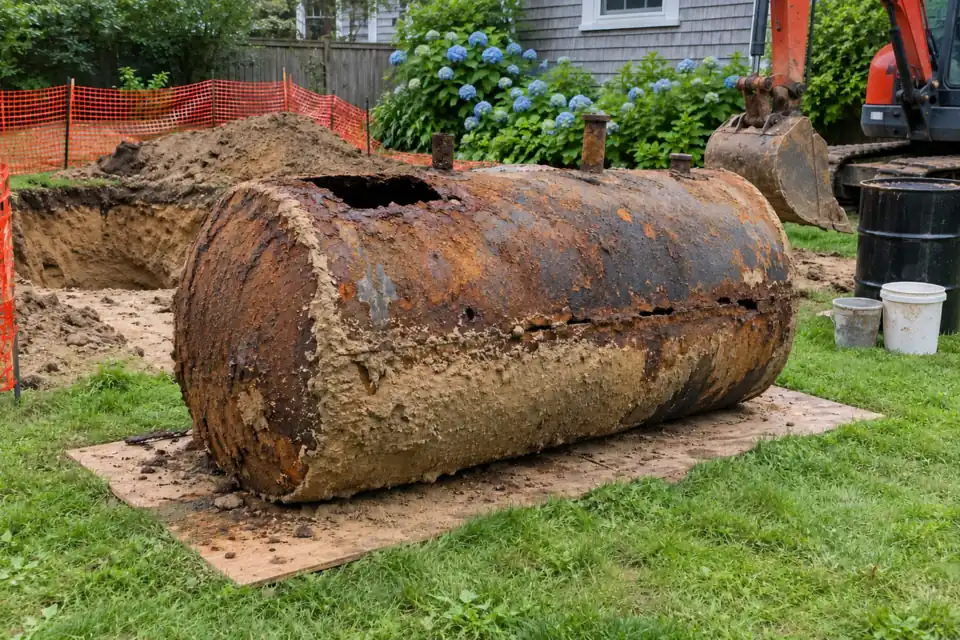
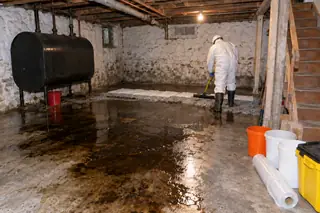
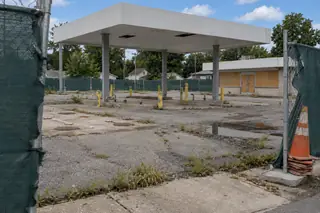
This page is about commercial, federally regulated tanks: the kind buried under gas stations, fleet yards, and convenience stores. Residential heating systems are exempt from most state UST contractor programs, so a homeowner replacing a basement tank usually does not need this commercial credential at all. If your tank heats a home, see heating oil tank removal instead, because the rules below will not apply to you. Homeowners in the Northeast can start with oil tank removal in New Jersey, New York or Connecticut. Everything that follows applies to regulated underground storage tanks, an asset class often shortened to UST in agency paperwork. This classification was compiled from a direct review of contractor licensing requirements in all 50 states and the District of Columbia.
There is no single federal license that covers this work. The federal program, run by the Environmental Protection Agency (EPA) under Subtitle I of the Resource Conservation and Recovery Act (RCRA) and 40 CFR 280, sets the technical rules every regulated tank must meet. What it does not do is decide who is qualified to hold the wrench. Each state writes its own credentialing law, so the practical answer to who may touch your tank falls into one of four categories, depending on the state where it sits.
Last verified: June 2026. Why this matters is simple and expensive: hiring an uncredentialed contractor in a state that requires one can void your closure approval and push cleanup liability back onto you, the property owner. A voided closure can stall a sale or a refinance for months. The four buckets below show exactly where your state lands, so find the list that names your state and read the rule attached to it.
Why state law, not federal law, decides who can work on your tank
The EPA administers the national underground storage tank program under Subtitle I of RCRA, the federal law that governs hazardous and solid waste. The technical standards for tanks live in 40 CFR 280, and the separate rules that let a state run its own approved program live in 40 CFR 281. The Energy Policy Act of 2005 then layered on mandatory operator training, periodic compliance inspections, and tighter release-detection requirements. Together, these federal layers govern the tank itself and the fuel inside it.
What the federal rules do not do is issue or require a national contractor license. Washington sets the standard the tank must meet and the records the owner must keep. It then leaves the question of who is qualified to meet that standard to each individual state. That is why two neighboring states can hold opposite answers for the same closure job, and why the map matters more than the federal code here.
One distinction trips up many owners, and it is the most important one on this page: the operator credential is not the contractor credential. Federal law requires every facility to designate Class A, Class B, and Class C operators, the on-site staff trained under the Energy Policy Act of 2005 to run and monitor the tanks day to day. The contractor is the separate company you hire to physically install, test, remove, or close the tank. A certified Class A operator is not, by that title, licensed to perform tank construction or a regulated closure.
So the real answer to your question comes down to one fact: which state your tank sits in. 33 states demand a full credential, three credential only a narrow slice of the work, one asks merely for registration, and 14 issue no tank-specific license at all. The next five sections walk through each group in turn, with every state linked to its own directory page. Find your state below and read the bucket it lives in.
States that require a certified UST contractor
In these 33 jurisdictions, a state agency issues a mandatory credential, and you should confirm a company holds it before you sign anything. This is by far the largest of the four groups, covering most of the country by tank count. Earning the credential here typically means passing an exam, carrying proof of insurance, and paying a fee to the state. In these states, skipping the credential is not a shortcut you can legally take.
Alabama, Alaska, Arizona, Arkansas, California, Colorado, Delaware, District of Columbia, Florida, Illinois, Indiana, Iowa, Kansas, Kentucky, Louisiana, Maine, Maryland, Minnesota, Mississippi, Montana, Nebraska, Nevada, New Jersey, Ohio, Oklahoma, Oregon, Pennsylvania, South Carolina, Texas, Utah, Washington, West Virginia, Wisconsin.
The credential goes by many different names from state to state. Florida issues a Pollutant Storage Systems Contractor (PCC) license through its Department of Business and Professional Regulation, and Texas licenses tank work through the Texas Commission on Environmental Quality. California requires a contractor who installs or removes a tank to pass the Contractors State License Board hazardous substance certification exam. Ohio runs the Bureau of Underground Storage Tank Regulations (BUSTR) under its State Fire Marshal, while Delaware certifies contractors under 7 DE Admin Code Part G and Kentucky requires UPST certification under 815 KAR 30:060. The names differ, but the gatekeeping function is the same.
For an owner, the stakes are concrete rather than theoretical. State reviewers can reject a closure report submitted by an uncredentialed company, and a rejected report can stall a property sale or a refinance for months while you redo the work. Your No Further Action letter, the state signoff that confirms cleanup is complete, generally depends on credentialed work standing behind it. In these 33 states, the credential is the gatekeeper for that signoff, and the signoff is what clears the title.
States with a limited, scope-specific credential
Three states credential only a narrow slice of tank work, so the word licensed does not mean a full tank credential in this group. You have to read the scope before you assume coverage of your job. A company can be properly licensed for one task here and hold no state credential at all for the next one. This is the easiest of the four buckets to misread, and the misread can be costly.
Massachusetts, New Mexico, Rhode Island.
Massachusetts, through MassDEP, licenses third-party tank inspectors only under 310 CMR 80.48, and it does not separately license install, removal, repair, or closure contractors. New Mexico, through the NMED Petroleum Storage Tank Bureau, certifies installers only under 20.5.105 NMAC, and permanent closure is explicitly excluded from that credential. Rhode Island, through RI DEM, licenses tightness testers, and state law requires installation, substantial modification, and closure to be done by or in the presence of a person with a state mechanical trades license. In all three, the tank-specific state credential covers only part of the job.
For full-scope tank work in these three states, line up the relevant trade credentials and apply the narrow state credential only where it actually fits the task. In practice, that means asking which specific job the state license covers and who is qualified to handle everything outside it. Do not let one valid license stand in for the whole project. Match the credential to the scope of the work, task by task, and you avoid the trap.
States that require registration only, not a license
One state asks for registration but sets no exam and no competency test of any kind. Registration confirms paperwork and insurance, not proven skill at the bench. That is a meaningful difference when you are choosing who will work on a regulated tank under your name. Missouri is the lone member of this group, and it sits between the licensing states and the no-license states.
Missouri requires annual registration with financial-responsibility coverage through the Missouri Department of Agriculture, Division of Weights and Measures, under Section 414.035 RSMo. There is no exam, no competency demonstration, and no published competency list tied to that registration. A registered company has filed its insurance and its paperwork with the state and nothing more. It has not had its tank skills tested by any board or panel.
So in Missouri, treat the registration as a starting filter and not a finish line for your decision. Confirm the company has done comparable tank work, ask for project references, and verify that the insurance behind the registration is current. Registration tells you a company exists on file with the state. It does not tell you the crew can close a tank correctly the first time.
States with no UST-specific contractor license
In these 14 states there is no state-issued, tank-specific contractor license, so the job of vetting falls squarely on you. That does not mean the work itself is unregulated or casual. It means the state credentials the tank and the cleanup standards, not the company performing the physical work. The burden of proof shifts to the property owner, who has to confirm competence without a state license number to lean on.
Connecticut, Georgia, Hawaii, Idaho, Michigan, New Hampshire, New York, North Carolina, North Dakota, South Dakota, Tennessee, Vermont, Virginia, Wyoming.
Many of these states do publish lists, which is where the confusion starts. North Carolina, Tennessee, and Virginia, for example, maintain convenience or service-provider directories of companies active in tank work. Almost all of these lists carry an explicit non-endorsement disclaimer, which means a spot on the list is a contact record and not a credential or a recommendation. Reading a state directory as a stamp of approval is a common and genuinely costly mistake.
In these states, verify the company's general, excavation, or environmental credentials directly, and confirm active insurance before any work starts on site. Then check the local rules, because a city fire department or a county can still require permits and advance notification that the state does not. A missing local permit can halt a job that is already underway and add weeks of delay. The absence of a state license is not the absence of rules.
How to verify a contractor's credential in your state
Start with the state where your tank physically sits, because that is the only law that actually governs the job in front of you. Your state directory page lists local companies and the credential basis that applies in that jurisdiction. A strict-licensing state like Texas or Florida sets a far higher bar than a no-license state such as Georgia or Wyoming. Confirm the rule that applies to your exact location first, and then build a shortlist from there.
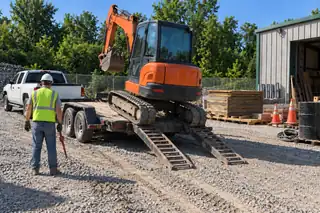
When you call a company, ask four things in order: the exact credential it holds, the scope that credential covers, its current insurance, and references on comparable tank work. Crews that excavate around contaminated soil also typically carry OSHA HAZWOPER training under 29 CFR 1910.120, which is worth confirming. A company that installs tanks may not be cleared by the state to close one, and the reverse is also true. Ask to see the credential number and verify it against the agency that issued it rather than taking the claim on faith.
To find contractors filtered by state, use the UST contractor directory and start with the jurisdiction where your tank is located. The directory organizes companies by state, so you can match a candidate against the exact bucket your state falls into above. Pair that search with the credential checks in this section before you request any bids. The aim is a credentialed specialist whose scope genuinely matches the job your tank needs.
If this is a home heating oil system, the commercial credential does not apply, and the buckets above are not your guide to it. For background on the daily reality of this trade, see what a licensed UST contractor actually does before you hire. When you are ready to compare bids head to head, how to choose a tank contractor walks through the questions that separate a real specialist from a generalist. Match the credential to the scope, and most of the risk takes care of itself.
Common questions about state UST contractor requirements
Does a home heating tank need a licensed tank contractor? In most states, the answer is no. A residential home heating system is generally exempt from the commercial underground storage tank program, and the state credential is written for regulated commercial systems rather than basements. Confirm your local rules anyway, since a handful of municipalities add their own permit or notification step even for residential tanks.
What happens if you hire an uncredentialed company in a state that requires a credential? The state can reject the work outright after it is already done. A rejected closure means no closure approval and no No Further Action letter, and the liability for the unfinished job can land back on you as the property owner. In a sale or a refinance, that single gap is often enough to derail the entire deal.
Is the Class A, B, or C operator the same as the contractor? No, and the two are easy to confuse. The operator is the facility's own designated person, trained to monitor and run the tanks day to day under the federal training rule. The contractor is the outside specialist you hire to install, test, remove, or close the tank. One role keeps the site compliant in daily use; the other performs the regulated physical work.
How do you check whether a company holds the right credential for your job? Identify the specific credential your state requires for your tank's location and scope, then ask the company for its credential number and verify it with the issuing agency. Confirm the scope covers your exact task, whether that is installation, testing, removal, or closure. Finish by checking active insurance and references on similar tanks before you commit.