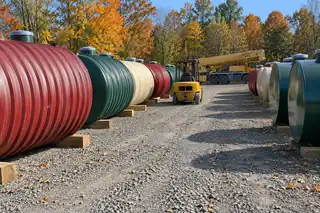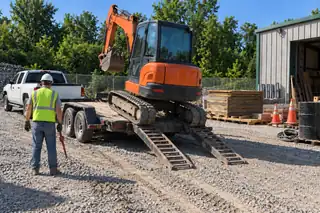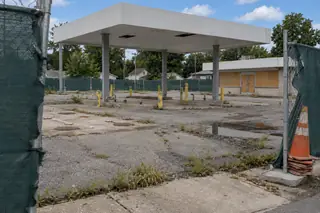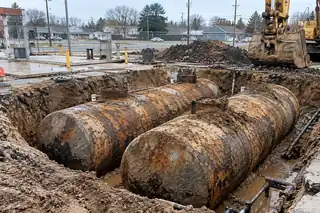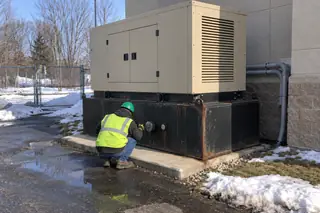
Contaminated soil disposal often costs more than the tank work itself. A typical residential heating oil tank closure generates 8 to 20 tons of excavated material, and tipping fees alone can range $25 to $75 a ton depending on contamination level and region. A commercial gas station closure can yield 200 to 1,500 tons, and disposal alone routinely exceeds $25,000 on those projects.
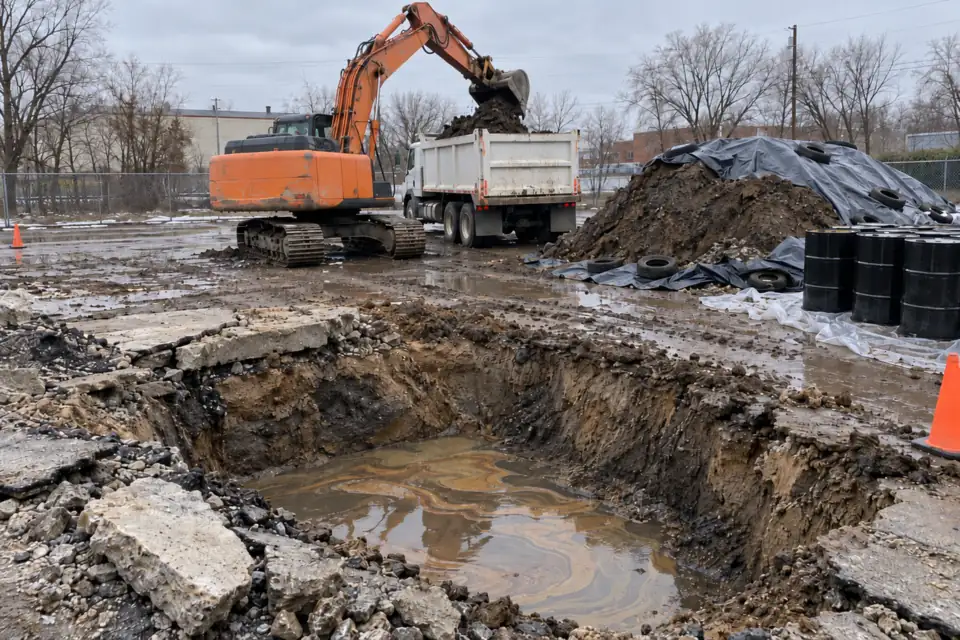
This guide walks UST closure project managers, environmental consultants, and brownfield developers through how state action levels, licensed hauler rules, facility classifications, pretreatment process options, and federal regulation combine to set the final invoice. The cost driver is not the tank itself but the soil underneath it, plus the compliance framework that decides where it can legally go.
Petroleum contaminated soil becomes a waste the moment it leaves the excavation, and 40 CFR 280.62(a)(4) requires its treatment or disposal to follow state and local rules. Most of it is nonhazardous solid waste under RCRA Subtitle D. Soil that fails the toxicity test for a heavy metal can become hazardous waste under 40 CFR 261.24, which triggers Subtitle C disposal and a different price tag entirely.
Treat contaminated soil disposal as an engineering problem with a paperwork tail. Sample early. Identify the right facility before excavation starts. Build hauling and disposal into the oil tank removal cost estimate rather than discovering it after the backhoe is on site.

What Counts as Contaminated Soil at a UST Closure Site
Whether soil can stay depends on laboratory results compared with the cleanup standards your state publishes, because federal UST rules leave cleanup levels to the implementing agency. States measure petroleum in different ways: many report Total Petroleum Hydrocarbons, expressed as TPH in mg/kg, while New Jersey measures fuel oil as extractable petroleum hydrocarbons (EPH). The numbers vary widely from state to state, and residential standards are typically stricter than commercial or industrial ones.
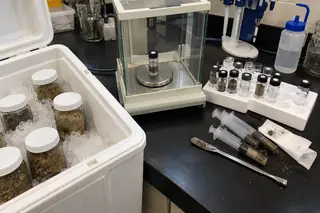
Sampling is the gate. A standard UST closure assessment under oil tank soil testing protocols collects two to four soil samples from beneath the tank and along the product piping, with additional samples from any visibly stained excavation walls. Laboratory analysis runs $200 to $400 a sample for TPH and BTEX (benzene, toluene, ethylbenzene, xylenes), and turnaround typically takes three to five business days.
Visual and olfactory observations matter but do not substitute for lab data. A high field PID reading is a strong indicator of impact, yet a clean PID reading on heavy fraction diesel can still hide significant TPH. State regulators want numbers on a laboratory report, not field impressions. The lab report becomes the primary document supporting facility acceptance and the closure file.
Soil that passes residential cleanup standards can be returned to the excavation as clean backfill, saving the project tens of thousands of dollars. Soil that fails the standard must leave the site under a regulated waste manifest. This binary decision drives most of the disposal economics on a UST project and explains why pre excavation Phase I ESA work pays for itself when contamination is confirmed early.
Federal Rules: RCRA Subtitle D and Subtitle C
The federal framework starts with the Resource Conservation and Recovery Act, RCRA, passed in 1976. RCRA splits waste into two categories that drive every disposal decision, and EPA's RCRA rules follow the same split. Subtitle D covers nonhazardous solid waste destined for municipal or industrial landfills, under 40 CFR Parts 239 through 259, with landfill criteria in Part 258. Subtitle C covers hazardous waste, under Parts 260 through 273, which moves under a far more restrictive cradle to grave tracking system.
Most petroleum contaminated soil from a UST closure is nonhazardous to begin with. The exclusion at 40 CFR 261.4(b)(10) covers much of the rest. Petroleum-contaminated media and debris from a cleanup under the federal UST rule are not hazardous waste even when they fail the toxicity characteristic for codes D018 through D043, which include benzene. The exclusion applies only to cleanups subject to 40 CFR Part 280, so soil from a home heating oil tank, which federal UST rules do not cover, does not get it.
The exception that catches projects is Pb, the toxic metal once added to gasoline (waste code D008). The toxicity characteristic at 40 CFR 261.24 sets a TCLP limit of 5.0 mg/L for D008. D008 sits outside the D018 to D043 range the UST exclusion covers, so soil from an old release of that gasoline can still be hazardous waste. Benzene's limit is 0.5 mg/L (D018), which matters for soil that does not come from a federal UST cleanup. Soil from former dry cleaners or industrial sites can fail on chlorinated solvents or heavy metals.
Underground storage tank technical standards live in 40 CFR 280. Part 280 governs release detection, corrective action, and closure for tanks holding regulated substances. Its corrective action rules require owners to remedy hazards from excavated contaminated soil, and any treatment or disposal must meet state and local requirements. CERCLA, the Superfund law, is usually not the framework for a fuel release: its definition of a hazardous substance in 42 U.S.C. 9601(14) excludes petroleum.
State Action Levels and Cleanup Standards
State action levels are where the federal framework gets sharp. Federal UST rules leave cleanup levels to the implementing agency, which approves each corrective action plan under 40 CFR 280.66, and the result is a patchwork. New Jersey has no TPH standard: it measures fuel oil as extractable petroleum hydrocarbons, and N.J.A.C. 7:26D sets the residential soil standard for No. 2 oil and diesel at 5,300 mg/kg. The San Francisco Bay regional water board's 2025 Tier 1 screening levels are 100 mg/kg for gasoline-range and 200 mg/kg for diesel-range petroleum in shallow residential soil.
Massachusetts runs its program under the Massachusetts Contingency Plan at 310 CMR 40.0000, with Method 1 soil standards and Reportable Concentrations that trigger reporting to MassDEP. New York's petroleum spill cleanups follow DEC's CP-51 soil cleanup guidance, which aims for pre-spill conditions and uses the unrestricted soil cleanup objectives in 6 NYCRR Table 375-6.8(a) where feasible. For regulated tanks, Pennsylvania has the responsible party choose one of the Act 2 standards (background, Statewide health, or site-specific) under 25 Pa. Code 245.311. Every state UST program publishes a different number, and the project closure file must reference the controlling state document.
Several states maintain dedicated UST funds that pay for cleanup at eligible sites, and the terms differ widely. New Jersey's Petroleum UST Remediation, Upgrade and Closure Fund still accepts applications for leaking home heating oil tanks, but NJDEP says they are date stamped and not processed until funding becomes available. Pennsylvania's USTIF (Underground Storage Tank Indemnification Fund) covers regulated tanks and leaves out typical home heating oil tanks. It must be notified within 60 days after a release is confirmed under 25 Pa. Code 977.34. Pennsylvania homeowners use DEP's separate cleanup reimbursement program, which pays up to $4,000 after a $1,000 deductible through December 31, 2027.
Tight regulatory states publish numerical cleanup standards in tables and require formal closure reports referencing those standards. In New Jersey, a home heating oil tank cleanup must be run by either a Certified Subsurface Evaluator or a Licensed Site Remediation Professional under N.J.A.C. 7:26F-1.12, and a regulated UST cleanup needs a Licensed Site Remediation Professional. In California, closure documents go to the local Unified Program Agency, which forwards closure data to the cleanup oversight agency through the Water Board's GeoTracker system. The state filing requirements add weeks to a closure timeline but produce defensible files.
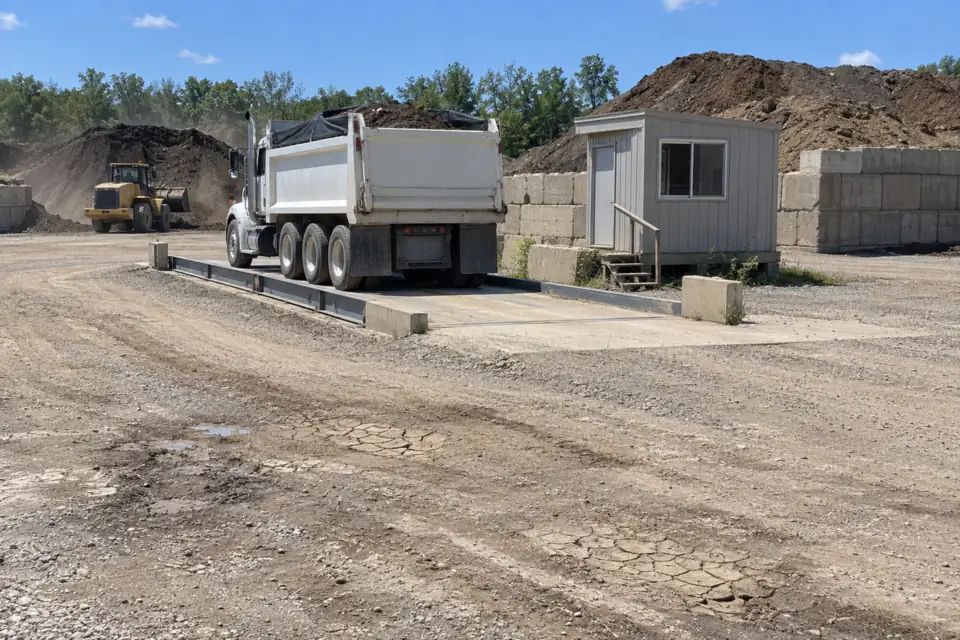
Disposal Facility Options and Per Ton Pricing by Region
Three facility types accept petroleum contaminated soil under most state programs. Subtitle D municipal solid waste landfills accept nonhazardous loads at the lowest tipping fees, typically $35 to $65 a ton, when the landfill operator has a waste acceptance plan that permits the stream. Soil treatment facilities and asphalt batch plants accept the same material for thermal processing at $45 to $90 each ton and reuse the treated product as fill or hot mix aggregate.
Subtitle C hazardous waste landfills (Clean Harbors, Waste Management Emelle in Alabama, US Ecology in Nevada) accept hazardous classified material at $140 to $450 a ton. The cost differential explains why TCLP failure changes the project budget by a factor of five or more. A 100 ton excavation that costs $5,500 to dispose at a Subtitle D landfill costs $35,000 at a Subtitle C landfill, and the cost is not optional once the waste is classified.
Regional pricing splits along three corridors. Northeast disposal markets (New Jersey, New York, Massachusetts, Connecticut) run $65 to $110 a ton for Subtitle D petroleum contaminated soil because of limited landfill capacity and high regulatory overhead. Midwest markets (Ohio, Indiana, Illinois) sit at $35 to $65 each ton with broader landfill availability. Pacific markets (California, Oregon, Washington) range $55 to $95 by the ton with thermal treatment options dominating the urban corridors.
Hauling adds a separate line item. A solid waste hauler charges $8 to $15 a loaded mile for a 20 ton transfer trailer, with a $300 to $500 minimum charged per load. Trip distances over 50 miles often push the hauling line above the disposal tipping line. Some facilities offer roll off container service at flat per container pricing that includes hauling within a defined radius.
Pretreatment Methods: Thermal Desorption, Bioremediation, Landfarming
Pretreatment can drop disposal cost by converting contaminated material into a less regulated waste stream or into a reusable product. Three technologies handle the majority of petroleum contaminated soil. Low temperature thermal desorption heats soil to 250 to 600 degrees Fahrenheit, volatilizes hydrocarbons, captures the vapor stream for combustion or carbon adsorption, and returns clean material meeting state reuse standards. Vendors typically charge $45 to $85 a ton for thermal processing.
Bioremediation uses indigenous microbes to digest hydrocarbons under controlled moisture, oxygen, and nutrient conditions. Ex situ bioremediation in a lined treatment cell takes 90 to 180 days and runs $25 to $55 each ton, but it requires permitted treatment area, weather windows favorable to biological activity, and patient project schedules. Bioremediation rarely fits commercial closure timelines but works for brownfield redevelopment projects where the site sits idle anyway.
Landfarming spreads contaminated material in thin lifts (12 to 18 inches) on a lined or naturally clay rich pad, then tills the material periodically to aerate. Hydrocarbons volatilize and biodegrade over six to eighteen months. Several states permit landfarming as a treatment technology under their solid waste programs, and the cost is the lowest of the three options at $15 to $35 by the ton, though regulatory permitting and land area requirements limit application.
Selecting between treatment and direct landfill disposal turns on contamination level, soil volume, and project timeline. Soils with TPH between the state action level and roughly 5,000 mg/kg often favor thermal treatment because the post treatment material can be reused on site. Heavily contaminated soils (above 10,000 mg/kg TPH) typically go direct to landfill because treatment vendors price aggressively against landfill alternatives. The environmental consultant running the project should price both routes before committing.
Hauling Logistics, Manifests, and Closing the Paper Trail
The disposal manifest is the spine of the regulatory chain. For nonhazardous Subtitle D loads, the paperwork is usually a Bill of Lading or Nonhazardous Waste Manifest issued by the generator (the property owner or contractor of record). The form lists waste description, origin, hauler, destination facility, and quantity. Generator, hauler, and disposal facility all sign and retain copies. Keep a copy of every load's manifest for the closure file.
Hazardous waste manifests under 40 CFR 262 are a different document. The federal Uniform Hazardous Waste Manifest, EPA Form 8700-22, must accompany every load of hazardous classified material. The generator needs an EPA identification number under 40 CFR 262.18, and under 40 CFR 263.11 the transporter needs one too. The destination facility must be a permitted Treatment, Storage, and Disposal Facility (TSDF).
Hauler licensing varies sharply by state. In New York, hauling regulated waste, which includes petroleum and its derivatives, takes a DEC waste transporter permit under 6 NYCRR Part 364, issued for the waste types and receiving facilities the hauler applies for. New Jersey requires every solid waste transporter to register with NJDEP, and firms that haul waste generated by someone else also need an A-901 license. California requires a Department of Toxic Substances Control registration to transport hazardous waste under Health and Safety Code 25163. Verify hauler credentials before loading the first truck.
Closure file documentation closes the regulatory loop. The file should contain pre excavation sampling data, post excavation confirmation samples showing the standard has been met, weight tickets from the disposal facility for every load, signed manifests, and a closure report referencing the controlling state standard. State agencies issue No Further Action letters or case closure notices only when the documentation is complete and the post excavation samples meet the standard.
Your Next Step: Pricing the Disposal Line Item
Build the contaminated soil disposal estimate before the excavation begins, not after. Start with a sampling plan that meets the state's UST closure assessment requirements. Identify the disposal facility and the hauling vendor before the tank comes out, and get written quotes that include tipping fees, hauling rate, fuel surcharge, and any required pre acceptance laboratory testing fees. Disposal facilities often require a pre acceptance sample at $300 to $500 before they approve a load profile.
Match estimated volumes to realistic ranges. A 275 gallon residential heating oil tank with confirmed minor staining yields 5 to 15 tons of contaminated soil and produces a $1,200 to $3,000 disposal line. A 1,000 gallon commercial heating oil tank with documented release can yield 50 to 200 tons and a disposal line of $5,000 to $20,000. A 10,000 gallon gas station UST that failed closure protocols can produce 500 plus tons and a six figure disposal line.
Contingency planning matters because soil volumes drift upward once excavation begins. Reserve 25 to 40 percent contingency on the disposal line specifically. Use the UST removal cost guide for 2026 for the broader project budget and add disposal as a separately sensitivity tested estimate. Track loaded tonnage in real time during excavation so the project manager can call the disposal facility for additional capacity if needed.
When the project moves forward, work with contractors who hold the licensing and the disposal relationships already in place. Get multiple bids on the contaminated soil disposal component specifically, because tonnage pricing varies more than any other UST cost line. Submit a quote request with your soil sampling data attached so contractors can price the disposal accurately rather than building padding into a guess. The right contractor saves more on disposal than they add in margin.